

In the culmination of a process that has been years in the making, Colorado officials Wednesday announced the creation of a state-run water conservation program.
In what officials are calling a “near-term contribution program,” the Upper Basin states (Colorado, New Mexico, Utah and Wyoming) will pay water users to voluntarily cut back in 2027 and 2028, using $100 million in promised funding from the U.S. Bureau of Reclamation. Colorado will now join Utah and Wyoming in setting up a conservation program within their respective states.
The noteworthy, long-expected announcement came at the regular July meeting of the Colorado Water Conservation Board, where board members considered the criteria for the program. A draft list says the program must, among other criteria, avoid negative community impacts; encourage contributions from across the state and water-use sectors; incentivize environmental benefits; encourage tribal participation; and build local drought resiliency. The board is scheduled to finalize the program criteria at its September meeting.
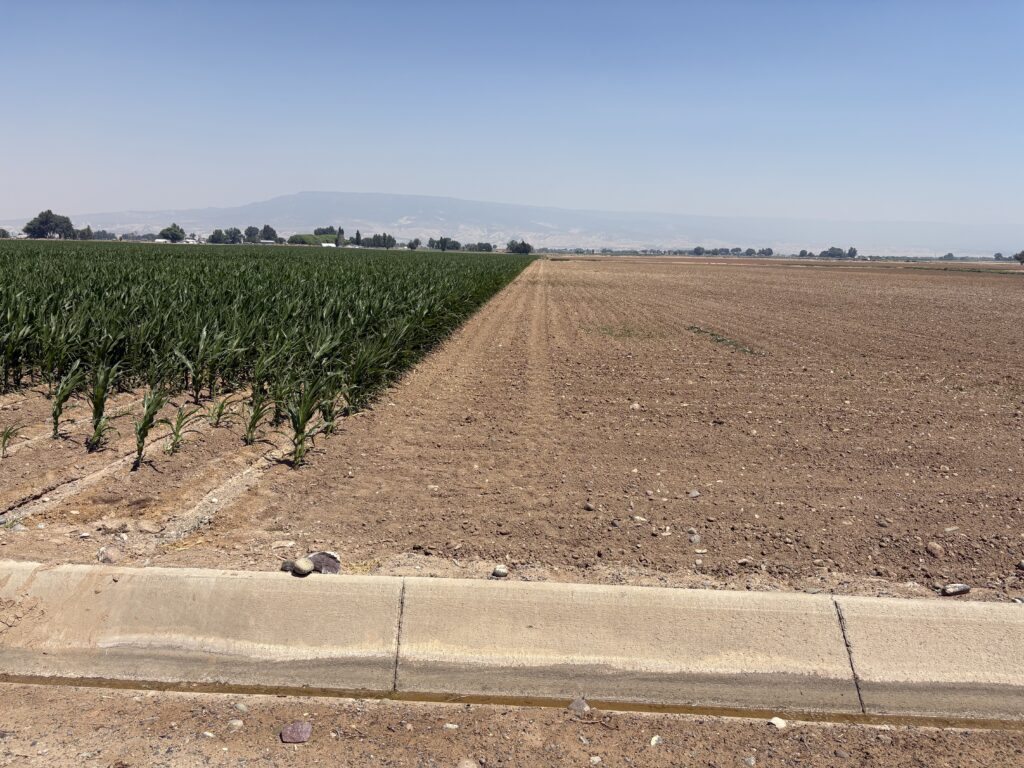
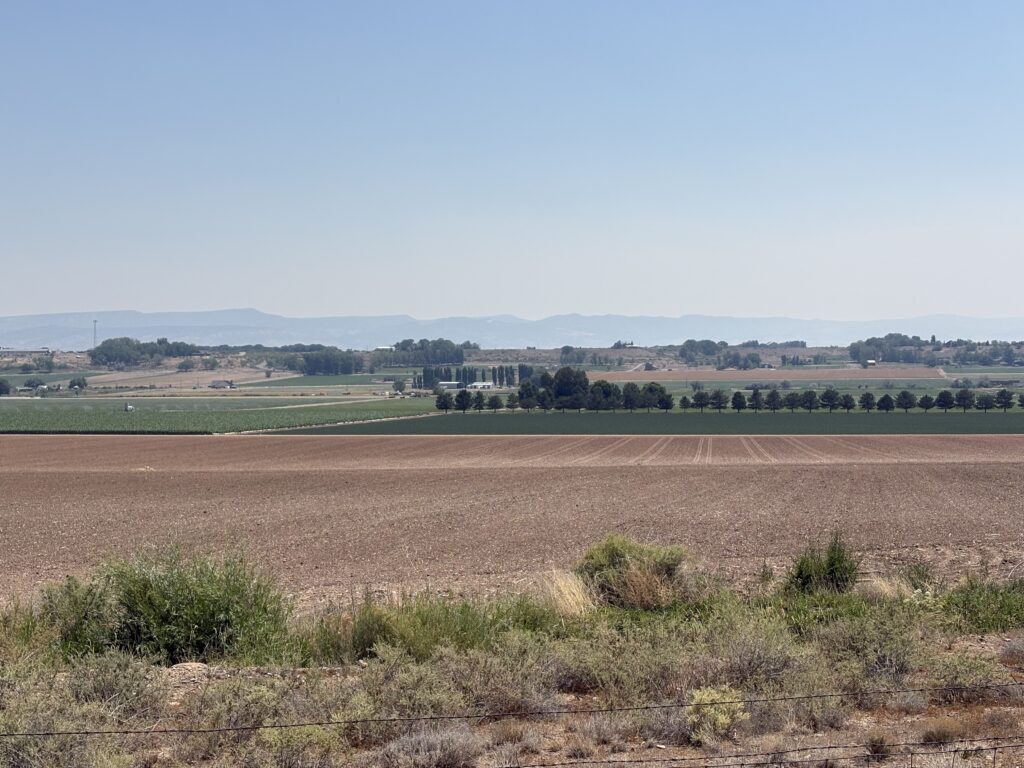
These types of conservation programs have traditionally targeted agricultural water users, often seen as the low-hanging fruit for water savings because they use the majority of Colorado River water. But officials are hoping this program will have participation across all water-use sectors, including municipal and industrial.
“I love that it is called a contribution program because that kind of imagines broader participation and engagement,” said board member Taylor Hawes. “So I think that is good. I think the more flexibility we can have, the better in a program like this.”
But details were scant on exactly how much water Colorado will contribute to the program and how the saved water would be used. And although some experts have begun calling for permanent reductions in water use, it remains — for now — a temporary, short-term program.
“We cannot guarantee a certain amount of water will be conserved in a given year because we don’t know how much water our water users are going to get,” said Amy Ostdiek, interstate section chief at the CWCB. “We have been clear that we just can’t do that.”
In a May letter to federal officials, the Upper Colorado River Commission said it has a goal of saving 100,000 acre-feet by the end of September 2028, which marks the end of water year 2028, but only if sufficient federal funding is available and hydrologic conditions allow. Colorado’s share of the Upper Basin’s allocation is 51.75%, meaning Colorado could be on the hook for 51,750 acre-feet over the next two years.
But Ostdiek said they are not at this time discussing a specific target that Colorado or the Upper Basin would have to contribute in exchange for the $100 million from the Bureau of Reclamation.
“We have felt confident that we can generate up to 100,000 acre-feet by 2028,” Ostdiek said in a Q&A session with the media after her presentation to the CWCB. “But really, what we’re going to be focused on is getting robust participation.”
It’s also unclear exactly how the saved water will be used. Officials said it’s not meant for use by the Lower Basin (California, Arizona and Nevada); it will be for the benefit of the Upper Basin. The water will need to have a home in Upper Basin storage buckets — Lake Powell, Navajo, Blue Mesa or Flaming Gorge reservoirs — but how it will fit into broader reservoir operations is unknown.
“I think that is going to be the subject of ongoing discussion, exactly how this water is used and characterized,” Ostdiek said. “I think what we know is that it needs to be credited to or subject to the discretion of the Upper Division states in some way.”
Conservation concept is not new
These types of programs that pay water users to cut back are not new to Colorado, and officials said they are incorporating the lessons learned from previous demand-management studies beginning in 2019, stakeholder input and pilot programs. The state participated in the 2023 and 2024 System Conservation Pilot Program, as well as an earlier version that ran from 2015 to 2018.
But conservation programs remain controversial. The Grand Valley Water Users Association, one of the largest irrigation districts on the mainstem of the Colorado River, did not allow its members to participate in SCPP for fear of negative impacts to other water users in the district.
All of the projects enrolled in SCPP involved agricultural water users on the Western Slope, a potentially risky situation, according to the Colorado River Water Conservation District. The Glenwood Springs-based agency, which represents 15 counties across the Western Slope, had tried to influence the creation of criteria for participation in SCPP to avoid negative impacts to rural agricultural communities.
Ultimately, only the Upper Colorado River Commission determined who got to participate in SCPP. Now, it seems state officials are taking to heart the River District’s recommendations. River District General Counsel Peter Fleming thanked Ostdiek for including some of the criteria that the district had set forth in its principles about how to create a conservation program.
Fleming encouraged the board members to adopt variable pricing to account for the difference in the value of relatively cheap water on the Western Slope versus more-expensive water on the Front Range. Pueblo Water had wanted to participate in SCPP, but the $509 per acre-foot offered in 2024 to Colorado participants was too far below market value.
“You can see the variable economic values of the water assigned there and the need to have variable pricing in order to encourage widespread participation,” Fleming said.
The River District’s position is that the entire burden of a conservation program shouldn’t be borne by the Western Slope, but must also be shouldered by Front Range water providers, who collectively deplete the Colorado River basin by about 500,000 acre-feet a year.
He added that a program should also have a strong element of local control.
“The River District obviously would like to stay involved in this process,” he said.
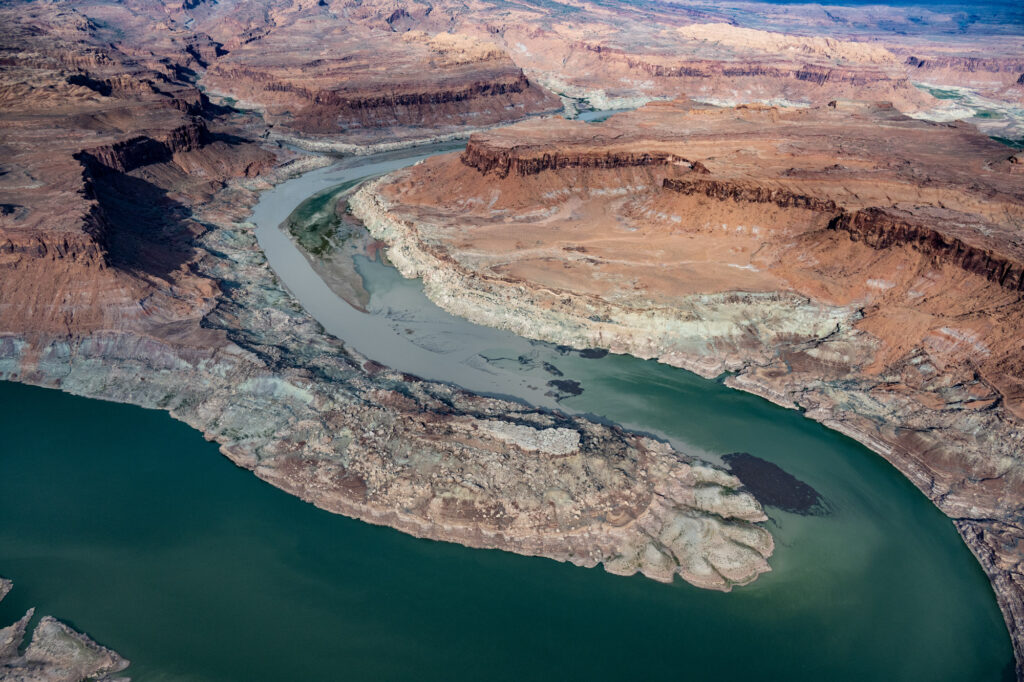
The creation of a conservation program for Colorado comes at a critical time for the basin, which remains locked in the grip of a historic drought, with combined storage in Lake Powell and Lake Mead at an all-time low since the reservoirs began filling. Although the Upper Basin has argued that it has never used its entire allocation granted by the 1922 Colorado River Compact (and therefore shouldn’t have to cut back), in the face of dwindling flows and calls for conservation from its downstream neighbors, the four states can no longer avoid reducing their water demand.
The Colorado River basin is also in the midst of a management crisis, with the seven states that share the river still unable to find agreement on a new framework after more than two years of failed negotiations. The current guidelines for how shortages are shared and how reservoirs are operated expire this year, and the feds are poised to step in with their own management plan, expected later this month.
The Upper Basin would need separate parallel agreements with Reclamation alongside the federal management plan to account for and get credit for water saved through the contribution program.
In her presentation, Ostdiek gave a preview of Reclamation’s expected plan, which could allow for a pool in Lake Powell to store up to 3 million acre-feet conserved by Upper Basin states. But board chair Barbara Vasquez worried about overestimating the amount of water that could be contributed given the recent historically dry conditions. Farmers and ranchers across Colorado are now experiencing the fallout from the worst snowpack on record in the form of shortages and fallowed fields.
“So prior programs, we spent a lot of money for very little water conserved. I worry that next year may be even worse than this year, and it’s not willingness, but ability,” Vasquez said. Given the water that’s available, she said, “that might disappoint expectations on the part of the negotiators at the table for the Colorado River.
Aspen Journalism is a nonprofit, investigative news organization covering water, environment, social justice and more. Visit aspenjournalism.org.