

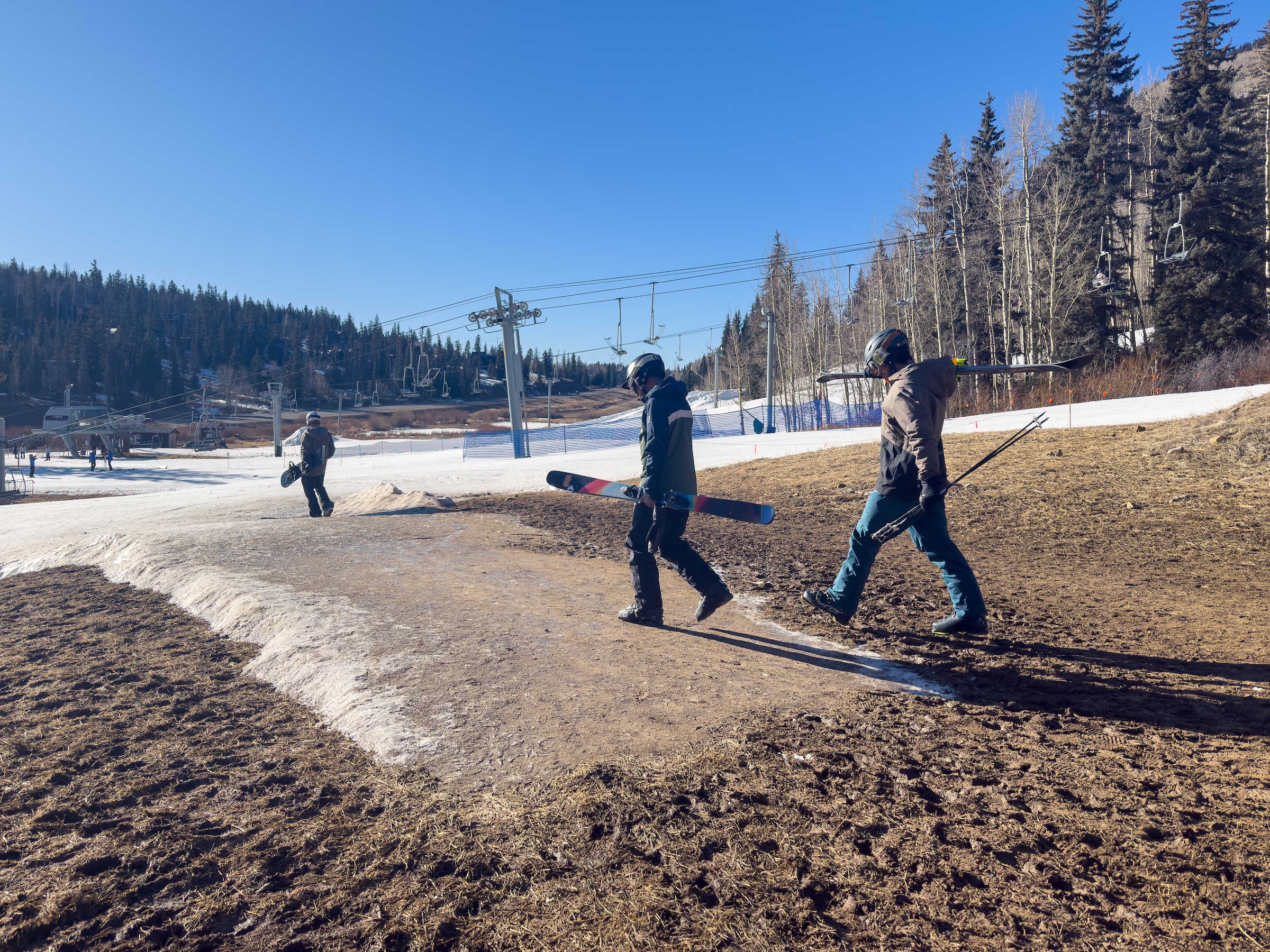
The American West’s historic snow drought in 2026 depressed skiers, heightened wildfire risks and constrained already scarce water supplies.
Was this extreme event just a stroke of bad luck in a region where snowfall naturally varies from year to year?
Or did the record-low snowpack bear the fingerprints of climate change?
A new study in the Proceedings of the National Academy of Sciences concludes that global warming more than quadrupled the odds of the West’s snow drought when compared to the preindustrial climate, before human greenhouse gas emissions began heating the planet.
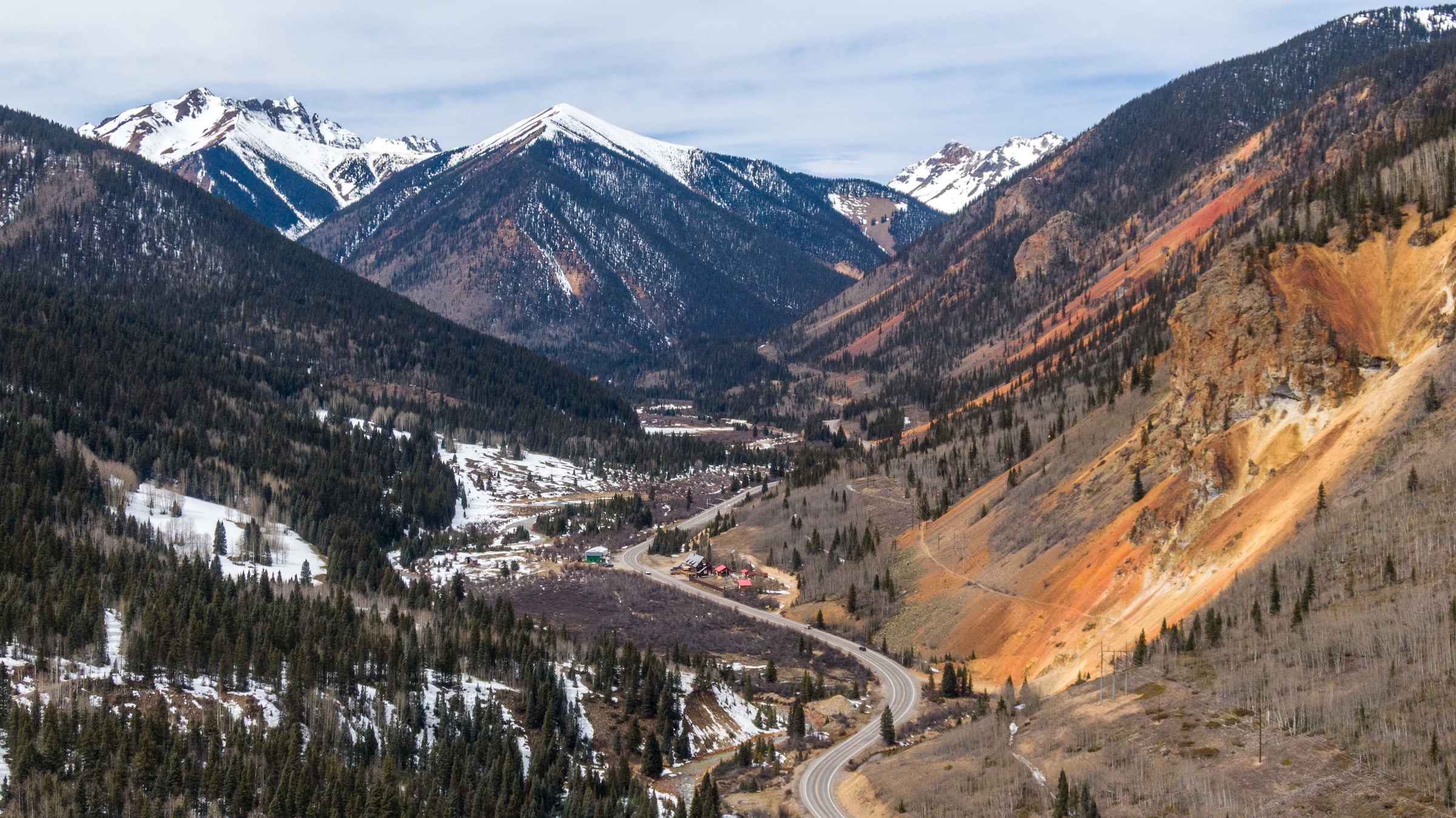
In the Upper Colorado River Basin, where snowmelt supplies most of the water in a river that serves tens of millions of people and irrigates millions of acres of farmland, climate change’s estimated influence was even greater. Researchers concluded the snow drought was about 14 times more likely, although that estimate is more uncertain because the event was so exceptionally rare, even in today’s warmer world.
Looking ahead, scientists project that snow deficits as extreme as the West’s 2026 drought could become the norm by the end of the century if emissions continue to climb.
In the 2020s, a Westwide snow drought as bad as last season’s has about a 1-in-10 chance of occurring each year, so it’s still not the new normal. But the odds rise dramatically under the “moderately high” emissions scenario used in the study: the annual probability more than triples to about 1-in-3 by the 2050s and soars to nearly 9-in-10 in the 2090s.

I spoke with the study’s lead author, Adrienne Marshall, a hydrologist and assistant professor at the Colorado School of Mines. Excerpts from our July 23 conversation are below, edited lightly for clarity and brevity.
“Where we are is serious,” Marshall said. But she emphasized that a West where profound snow droughts are routine is not a fait accompli, because future greenhouse gas emissions are not set in stone.
“These are not predictions of what will happen in the future,” Marshall said. “I think this type of work is most useful if it is motivational and not discouraging.”
How would you summarize the most important findings of the study?
I think our most important findings here are that we were able to look at the extent to which this last year’s unusually low snow conditions were attributable to human-caused climate change.
We found that across the Western U.S., the low snow conditions we saw were about four and a half times more likely because of climate change that we’ve experienced to date. That is equivalent to a water volume that’s about the size of Lake Mead. If we think about a rare event in a world without human-caused climate change and a rare event in the world we’re living in, the amount of snow we’re missing is about the size of Lake Mead.
In the Upper Colorado River Basin, the snow drought was more extreme, so we find a higher “risk ratio,” meaning an increased probability due to human-caused climate change.
Did these findings surprise you?
The thing that surprised me was the magnitude. I wasn’t surprised to see that these events seemed to be attributable to human-caused climate change. I was a little bit surprised to see numbers that were quite as big as they were.
The study says that climate change made the snow drought about 4.4 times more likely. Could you explain that further? What exactly does that mean?
To dig into what that “more likely” means, people might have heard before of things like a 100-year rainfall event or a 100-year flood event, where we can say we would expect an event like this one to have maybe a 1% chance of happening each year. That would be a 100-year event.
So we took that approach with unusually low snow conditions. We used some models that were run for the 1850 to 1900 period, so that’s our period without human-caused climate change. And we saw that, in that period, the snow conditions we had this year would’ve been about a 1-in-30-year event. Then when we use those same models for about a 20-year period encompassing the world we’re living in now, we see it’s about a 1-in-7 event. And then we divide those two numbers, so 30 divided by about seven, to get that approximately four and a half times more likely value.
Why is climate change making snow droughts like this much more likely?
In the most basic sense, there are two things that can cause snow drought. One is warm temperatures, and then the other one is just not getting any precipitation at all. So when we have warm temperatures, we get precip that falls as rain rather than snow.
When we think about the impacts of climate change, we have a lot of certainty about increasing temperatures. We have very good evidence that temperatures have increased, and models agree really well that they expect temperatures to continue to increase. That also aligns with our basic physical understanding of the Earth system.
Precipitation is a lot more uncertain, so it’s harder to see clear trends in winter precipitation so far, and models tend to disagree more about how we think precipitation will change—at least in the Western U.S. So when we think about the impacts on snow, those warming temperatures giving us less snow are kind of a really clear climate signal while the uncertainty in the precipitation can muddy the waters, relatively speaking.
With this snow drought, it sounds like it was really primarily driven by temperature.
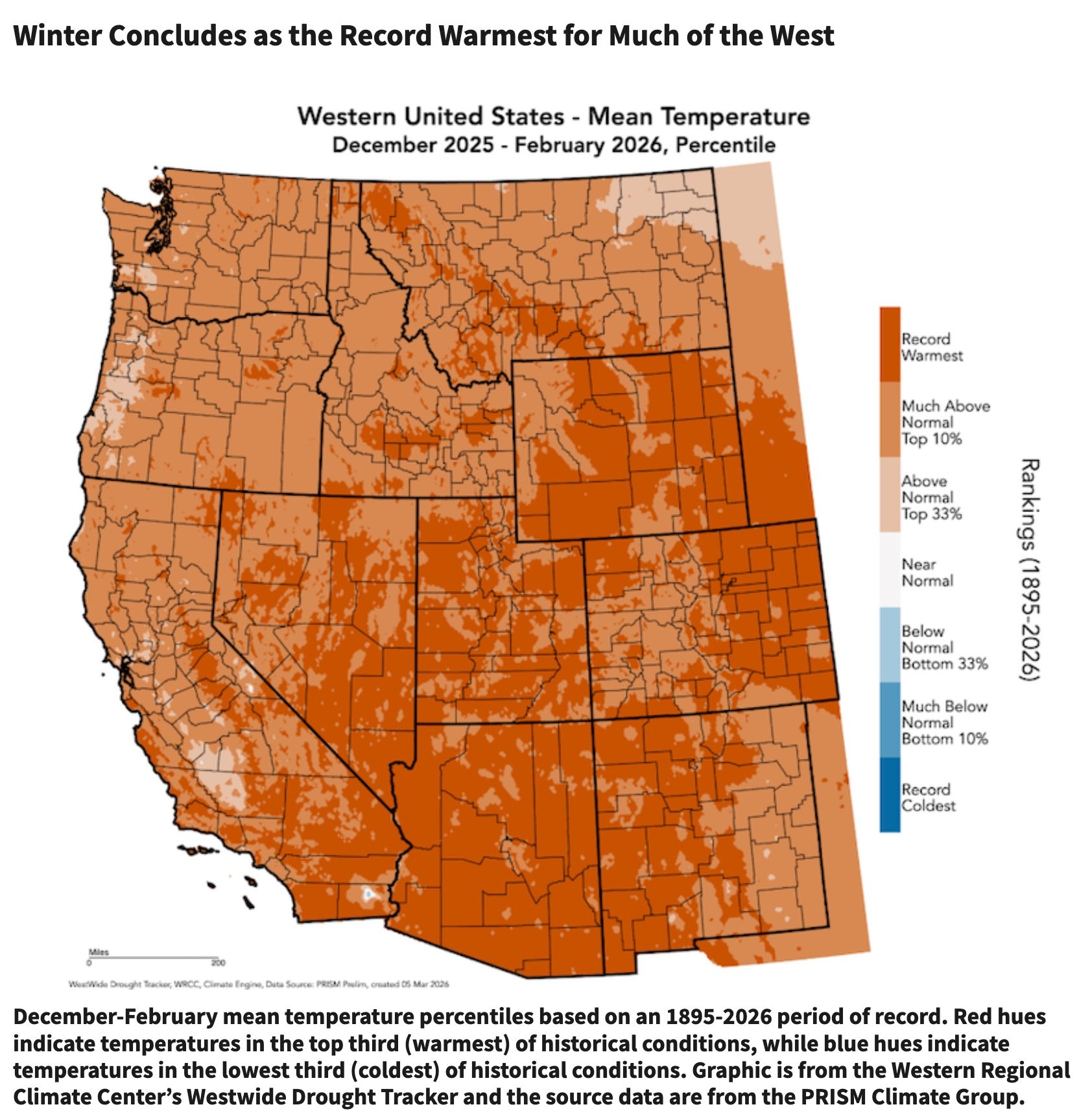
We haven’t quantified what was the contribution of temperature versus precip. But if we look at what was happening across the West this year, temperatures were really unusually high over much of the winter, with sort of an extraordinary heat wave in March. Precipitation was low, but not extraordinary across most of the Southwest. And then as we look up into the Pacific Northwest and British Columbia, we tend to see precipitation that was a little bit above average up there. Temperature: kind of extraordinary. Precipitation: more within a range of variability that we’re used to seeing.
The date you used was March 15. We often hear about people using April 1 as the key milestone for snow water equivalent (a measure of the snowpack’s water content). Why did you use March 15?
We used March 15, in large part, because this year it looks like that was approximately peak snow water equivalent—when we sum up how much snow was sitting there across the West. We thought that was a useful indicator of how much snow does a water manager have to work with, even if it was earlier than usual. I think doing the same analysis with April 1 would be interesting, too. The statistics get a little bit more challenging for more rare events. Because of that March heat wave, I think that we would see that April 1 snow would likely have been even more extreme, which could make the statistics a little bit more challenging—increase uncertainty, essentially.
The study also looks specifically at the Upper Colorado River Basin. Could you explain what the findings were for that portion of the West?
In the Upper Colorado River Basin, this event was especially extreme. Snow was really particularly low. Our best estimate here is that, in the world we’re living in now, the snow conditions this year were about a 1-in-140-year event in the Upper Colorado River Basin, so quite rare. In the world without anthropogenic (human-caused) climate change, we think that it would’ve been maybe a 1-in-2,300-year event. Once we start estimating events quite that rare, we get big uncertainty ranges. Then when we divide those two, we see that in the Upper Colorado River Basin, we think that this event was about 14 times more likely because of human-caused climate change. But there our uncertainty is really large.
The study also looks ahead to the future and the climate continuing to warm. What should we expect going forward?
These results were quite sobering. We look at what we would expect to happen in a moderately high greenhouse gas emissions scenario. What we see is for the Western U.S., we estimate that an event this bad had about a 10% chance of occurring each year in the 2020s. By the time we get to the 2050s, that slightly more than triples. So every year we would have about a 30% chance of having snow at least this low. And then by the 2090s, that becomes 87% of years, so we would expect that most of the time the snow would be at least this low Western U.S.-wide. In the Upper Colorado River Basin, we also see increases, but because this event was so extreme, we never see it becoming the norm in the 21st century.
The really important caveat here is that these are not predictions of what will happen in the future. These are our estimates of what we would expect in a particular greenhouse gas emissions scenario. And there are other greenhouse gas emission scenarios that are better. We could emit fewer greenhouse gases than this and do better than what these projections suggest.
It seems like pretty clear evidence for the benefit of reducing emissions for the snowpack.
The analysis I’d like to do is to look at the other scenarios and say, “OK, how much better would it be?” We don’t quite have the data to make exactly that apples-to-apples comparison at the moment, but there’s ways to pursue that . . . Based on our understanding of this system, I would strongly expect that if we look at a lower-emissions scenario, we would not see those probabilities climb quite so high.
We often hear the question, “Is this the new norm or is this the new normal?” These data suggest that it’s not right now. Western U.S.-wide, it could be by end of century. So I do look at that and think, “Let’s try to avoid that.”
What do you hope the public and decision-makers take away from this study and the projections?
There’s three big takeaways I have in mind. One is that I hope it’s clarifying in terms of where we’re at right now in terms of the impacts of climate change. It’s relatively new that we can look at a specific snow year and say, “Here’s how much this was caused by anthropogenic climate change.”
The second impact is I hope it’s useful for adaptation so that individuals and utilities and water managers can look at this snow year and think seriously about what we might like to do to adapt to more snow years like this.
And then the third thing is to help motivate us to see if we can push emissions trajectories downwards and do what we can to avoid having more snow years like this to the extent possible.
To learn more about the opposite of snow droughts—known as snow deluges—see my 2024 Q&A with Marshall about her research on California’s epic snowpack during the 2022-2023 winter.
This story was produced and distributed by The Water Desk at the University of Colorado Boulder’s Center for Environmental Journalism.