


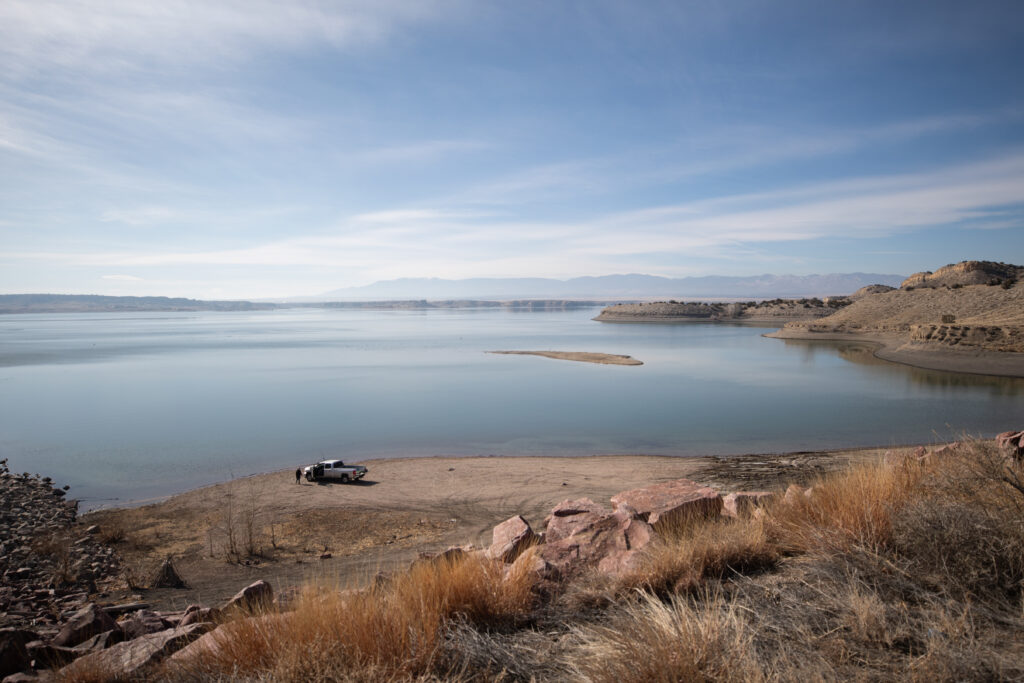
For the last two years, Robin Daigle has had to boil her tap water before pouring it in ice cube trays.
She boils tap water if she needs it to cook. When her children are thirsty, Daigle drives 30 minutes to Walmart to pick up bottled water.
“We are afraid to drink the water,” said Daigle, who moved to North La Junta, Colo. two years ago and has not had drinkable tap water since.
She is far from alone. Residents of southeastern Colorado regularly take trips to the store to buy potable water. They wash their clothes and bathe in the contaminated water that flows from their faucets.
“I worry that over time it could cause health problems,” Daigle said. “Having safe drinking water is vital for humans to be able to thrive.”
In southeastern Colorado, tap water can run orange out of the faucet, smell of bleach and corrode the appliances it touches. Tap water can be laden with some carcinogenic contaminants, like naturally-occurring selenium and radium. Many of the valley’s shallow groundwater wells produce water high in iron, manganese and other heavy metals, which can be hazardous to human health. Sourcing of the contaminants found in the lower Arkansas Valley may include erosion of natural deposits and discharge from petroleum refineries or mines, according to EPA drinking water regulations.
The experiences of Daigle, her neighbors, and surrounding communities caught new attention following a presidential veto in late December 2025 that denied measures to refinance the cost to construct the Arkansas Valley Conduit, a new source of drinking water. Many residents in southeastern Colorado still seek out potable water; some drive to the nearest grocer to buy individual bottles, gallon jugs, or even five-gallon jugs of drinking water. Others rely on reverse osmosis, or R.O., filters.
In many Arkansas Valley communities, the water is unsafe to drink, but residents are also concerned about the costs associated with the proposed solution: the 130 miles of pipeline the conduit project plans to build.
The pipeline project intends to serve potable drinking water to around 50,000 people in 39 communities and towns in rural southeastern Colorado. In conjunction with the federal Bureau of Reclamation, the Southeastern Colorado Water Conservancy District is constructing the pipeline and delivery lines aiming to serve the lower Arkansas Valley with potable water.
Construction began in 2023. Because of the scale and high cost, the project is taking a phased approach. As of Feb. 23, 2026, 12 out of 130 miles of trunk line have been constructed, and two out of 39 delivery lines have been constructed, according to Chris Woodka, senior policy issues manager of the Southeastern Colorado Water Conservancy District.
President Donald Trump vetoed H.R. 131 in Dec. 2025. The act had passed through the House and Senate unanimously with bipartisan support before it was vetoed. The legislation aimed to refinance the existing terms of the project by lowering interest rates from 3% to 1.5%, and extending the repayment period of the project from 50 years to 100, then amended to 75 years.
The veto did not add or remove any funding for the project itself, according to Woodka. “We didn’t stop any construction,” Woodka said. The project, he said, was not stalled at all.
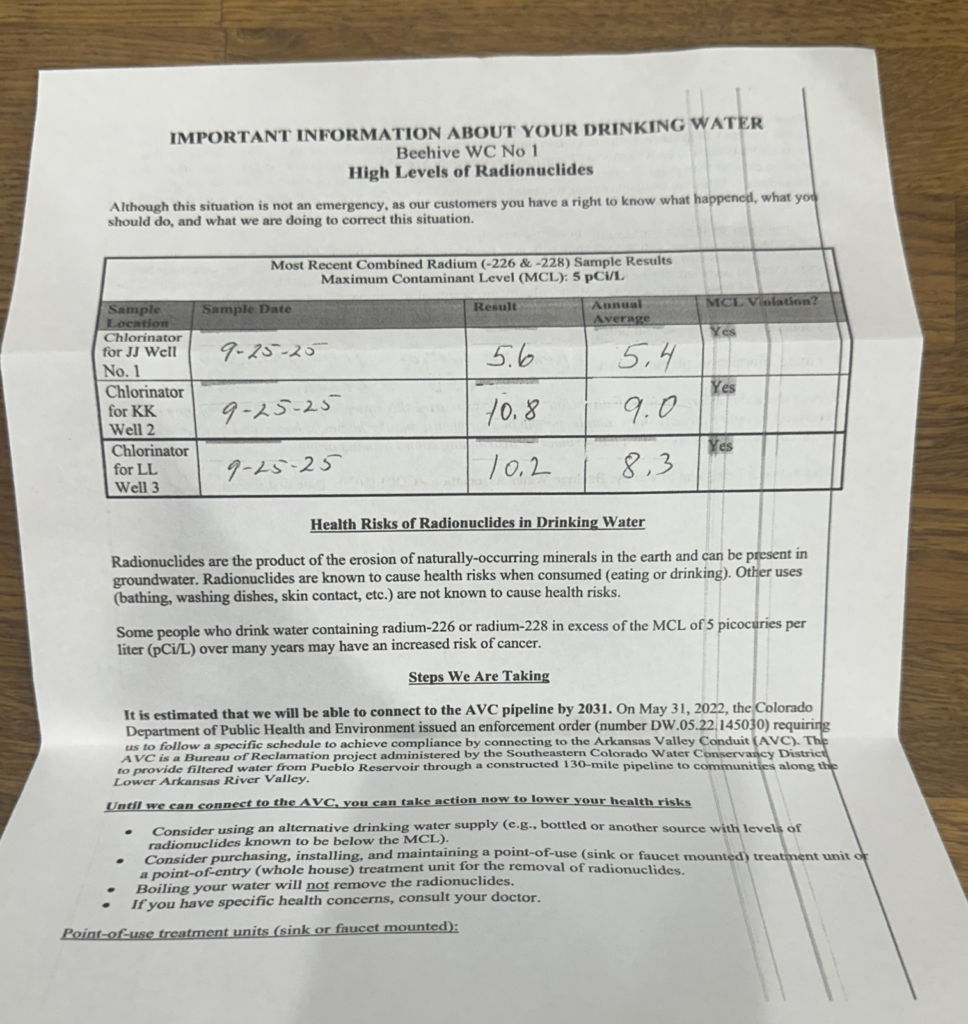
Lindsey and Jarett Hart are customers of Beehive Water Association, a small, rural cooperative water provider, near the town of Cheraw. They receive quarterly updates from the water company about the quality of their drinking water, which flows out of their tap discolored. Beehive Water Association estimates that they will be able to connect to the Arkansas Valley Conduit by 2031.
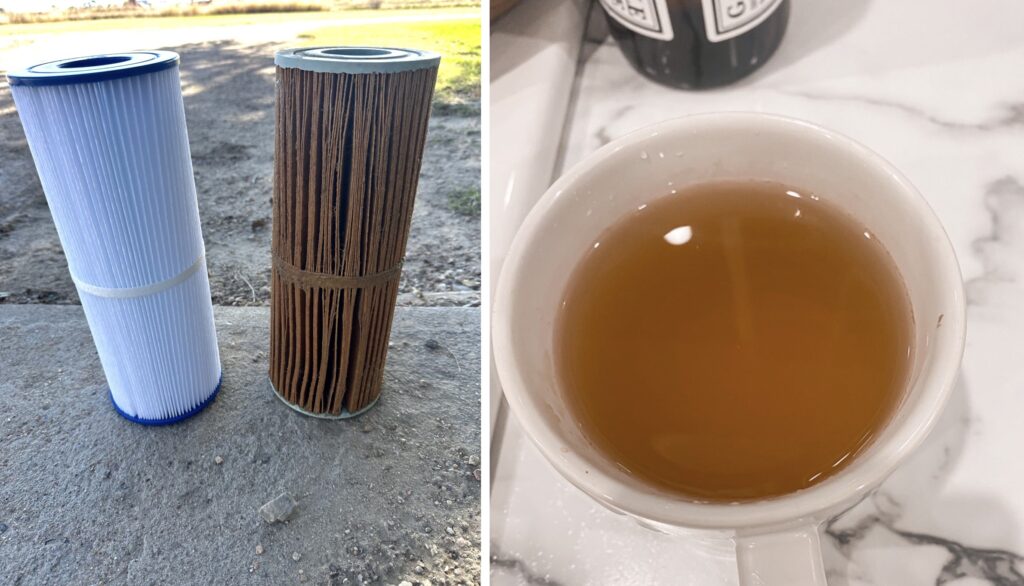
“I am not happy about [waiting] five years, but I would live with it if that meant eventually we could have access to that cleaner, healthier, safer water,” said Lindsey Hart, who is worried that estimate may not be accurate at all. She and her husband feel that updates are not widely available to the public, so they are left guessing. “I certainly wish we could have access to it a lot sooner.”
Her frustration does not stop at contaminated drinking water. “We can’t even cook with our water. We can’t boil pasta or cook rice or anything like that safely,” Hart said. “Our water down here is awful.”
In their home, plants die and appliances corrode, all because of contaminated water. The couple does not give the water to their pets either. “When I smell bleach when we turn on our tap or our shower, it’s very frustrating,” Hart said. “It makes me just really irritated and angry.”
Corrosion of household plumbing systems pose their own set of health risks, including lead poisoning.
The Arkansas Valley Conduit project has been in the works in some form since the Kennedy Administration. In the 1960s, it was part of the Fryingpan-Arkansas Project Act. Portions of that large-scale transmountain diversion project were built out, but not the Arkansas Valley Conduit. The conduit project was halted in 1978 due to funding scarcity.
By 2000, the conduit was revived. Water quality testing found high levels of radioactive materials in well water, prompting a grassroots group to form in Otero County, advocating for improvement in the quality of their drinking water.
Riddled with radionuclides and high levels of salinity and selenium, the water in some cases exceeded the maximum contaminant levels (MCLs) set by the EPA. Each of these contaminants pose various health risks for humans when ingested.
An environmental impact assessment administered by the Bureau of Reclamation found that the project was the best option to reduce community exposure to the contaminated water. “A lot of people down there say, ‘we don’t drink the tap,’” Woodka said. “That’s the situation that creates the need for the Arkansas Valley Conduit.”
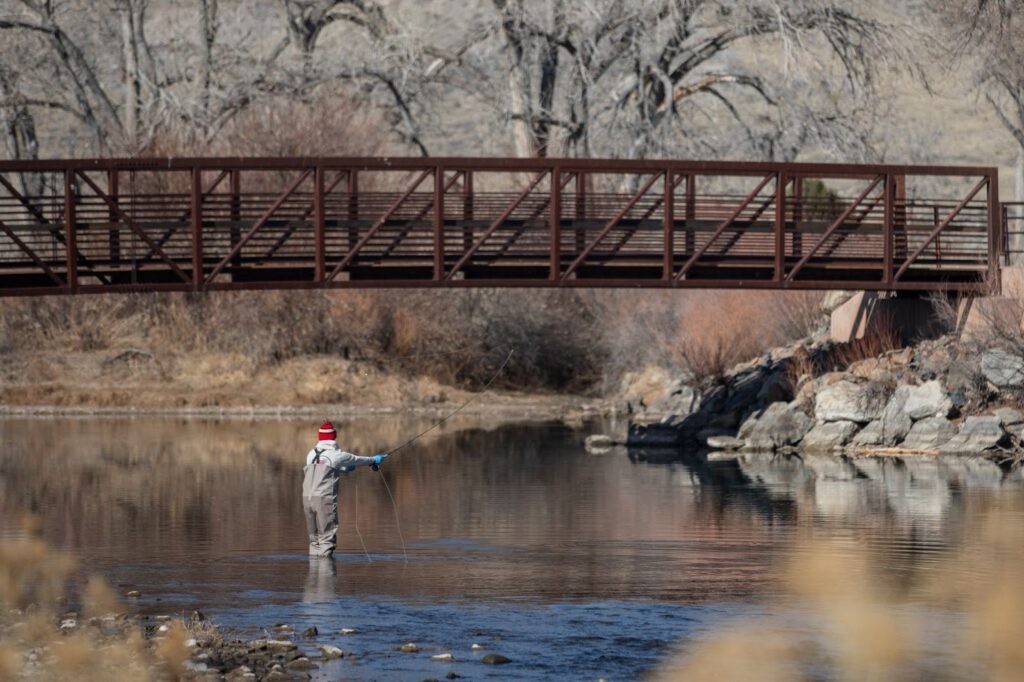
Residents of southeastern Colorado are already weary of the potential rising costs they will incur in the face of the project.
“I cannot fathom anyone would want to smell bleach in their water, or go to turn on the faucet outside and it’d be absolutely burned from rust,” said Hart. “I think the issue is nobody has told these communities or people that are receiving this, what is it actually going to cost us on our water bill?”
Federal legislation passed in 2009 allowed for 35% of the cost burden to be covered locally, the remaining 65% federally. This share was intended to make the project more affordable for the people of the Lower Arkansas Valley.
However, in 2024, the construction bill for the project went up due to increases in costs of materials and unanticipated conditions builders ran into on the ground. In 2020, the estimated cost of the project was around $600 million. In 2024, that estimate jumped to $1.3 billion, according to Woodka. Despite the price hike, the project still has support in Colorado. According to Woodka, more than $4 million in grants and loans from the state have gone to construction.
Trump’s veto also spurred rare bipartisan condemnation among the state’s congressional delegation. U.S. Reps. Lauren Bobert, Jeff Hurd and Joe Neguse have each expressed outrage at the veto decision, and Congress’ refusal to override it.
But not every Arkansas Valley resident is anxious for the new water supply. James Budnick, a plumber and eight-year resident of Rocky Ford, worries how costs will affect the community. He is in regular attendance at meetings related to water rights in Rocky Ford and Otero County. “I ask them the same question, how is this going to be regulated and who will be regulating it?” Budnick said.
His main concern is that the promise of better water quality will bring development to Rocky Ford and costs will fall on taxpayers rather than developers. “I love Rocky Ford because it’s a small town, but I see that water coming as a threat to the lifestyle,” he said. “The only reason that the valley is the way it is, is because of the water laws out here.”
Budnick is a member of Newdale-Grand Valley Water Company. The company has a limited number of taps, or a limit on the number of homes they can supply with water. Budnick is particularly worried that the conduit would change water regulations in Rocky Ford with higher costs, less availability.
“I understand people wanting to save money, as water is extremely expensive,” said Bobby Scott, who recently relocated to the town of Fowler, “but not at the expense of their health. Coming from Texas, this water difference is noticeable.”
The difference was so noticeable that in the first few weeks of Scott and his wife living in Fowler, they started to feel sick from the water. “I want to find out what we’re drinking,” Scott said.
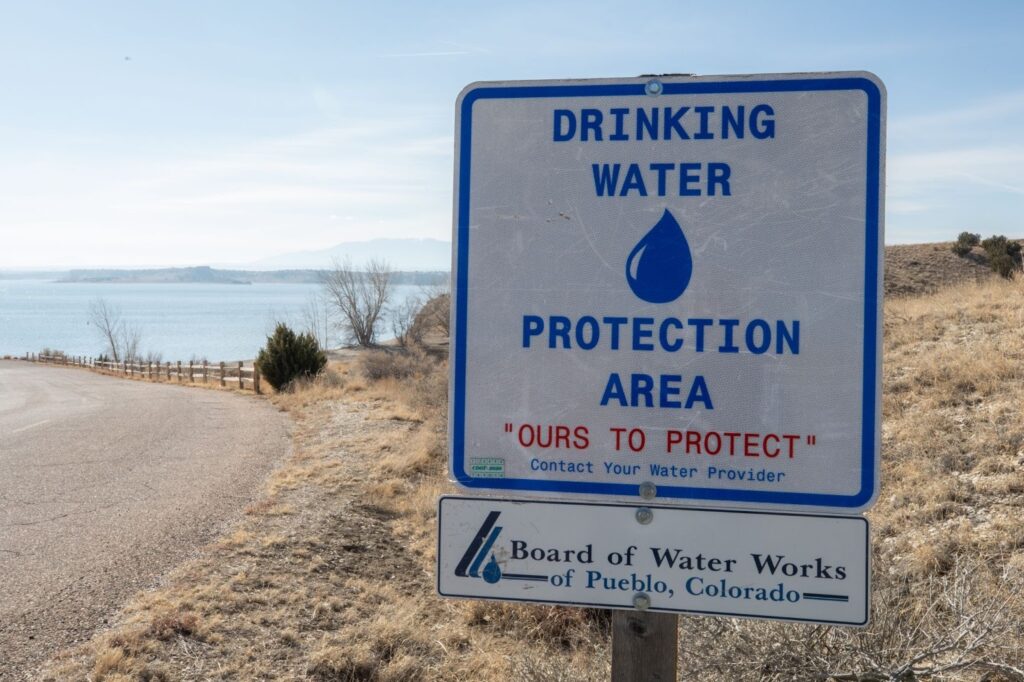
The Arkansas Valley Conduit water itself comes from the Fryingpan River on Colorado’s Western Slope. It travels in a tunnel through the Continental Divide, where it deposits into Turquoise Lake just outside Leadville. The water then flows down into Twin Lakes and down the Arkansas River. It then collects in Pueblo Reservoir, where the water will be treated. Then, the 30-inch trunk line will deliver water to Avondale through Lamar via 39 delivery lines down the lower Arkansas Valley.
Of the 39 participating communities on the Arkansas Valley Conduit, the majority reside in Otero County. Otero County Commissioners came together to ask for the president to rescind his recent veto of H.R. 131. “Providing clean drinking water is our priority as County Commissioners,” they said in a statement made in early February. “This water project is vital to our communities.”
Woodka estimates that the more than $400 million of federal funds and more than $4 million from the state will be enough to build delivery lines through Rocky Ford. “Nothing like it has been done before, 39 water systems into one pipeline,” said Woodka, who remains optimistic about the project’s future.
“It’s at greater momentum than it has ever had right now.”
This story is produced and distributed by The Water Desk at the University of Colorado’s Center for Environmental Journalism.