


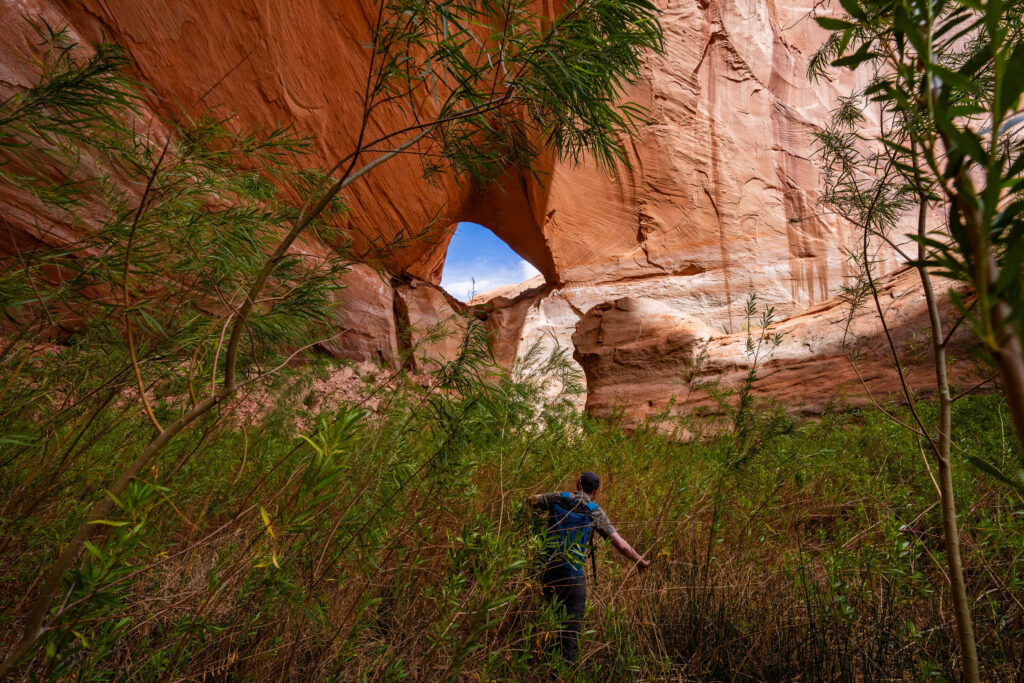
“We’re entering beaver land!” Zanna Stutz yelled joyfully.
Stepping lightly over slick, wobbly mud and splashing through ankle-deep water, she approached a small dam created by nature’s engineers.
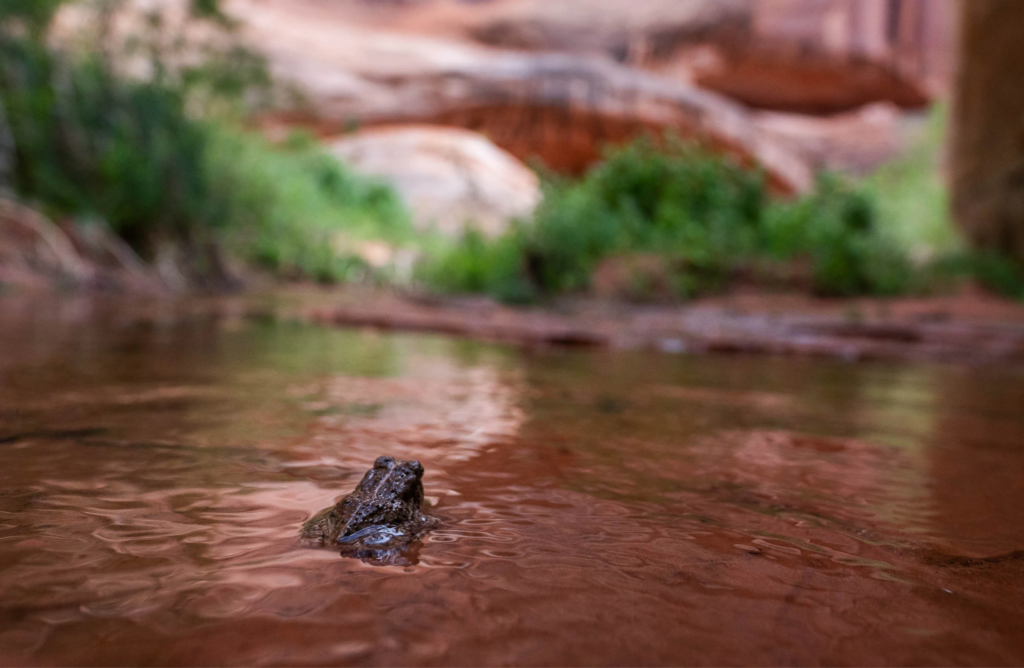
A Woodhouse toad began croaking, harmonizing with the water trickling through a stack of sticks and chewed logs.
Stutz, the program director of the Glen Canyon Institute, and other environmental advocates looked for the amphibian. They spotted one hiding in the willows next to the stream. A few steps later, they saw another swimming in the water pooled behind the dam.
“That’s a great indicator of really good water quality,” said David Wegner, a founding trustee of the Glen Canyon Institute and former Bureau of Reclamation scientist. “How cool is that?”
As the group continued up Davis Gulch — one of the 127 side canyons that have reemerged as Lake Powell has receded — more beaver dams came into view. Each dam gave the stream a different pitch and rhythm as the water flowed over and through woven branches and twigs.
Willows, which started at shin height at the bottom of the gulch, now brushed shoulders and eventually towered above heads. The plethora of native plants mixed with the moist, muddy earth gave a sweet, woody smell.
“People said it was a wasteland. But just look: the desert varnish is recovering,” Wegner said as he pointed to the sandstone walls, once bleached from the lake but now regaining orange and brown streaks.
“Vegetation is coming back,” he continued, as he gestured to the native grasses stabilizing the soil. “It’s not a wasteland. It’s valuable and important.”
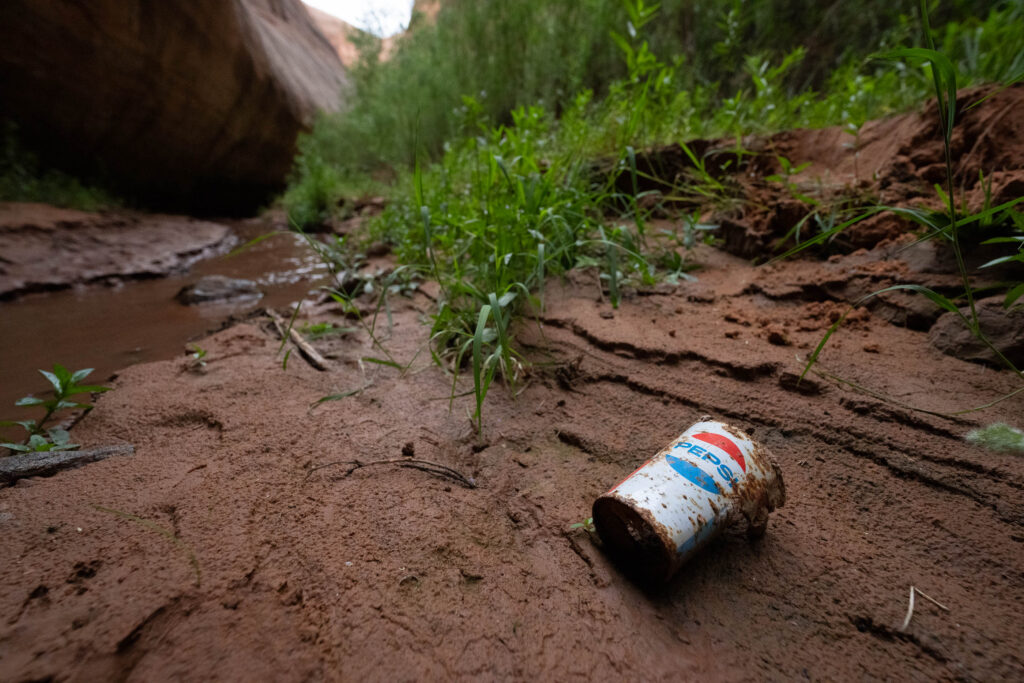
Next to the reeds, an occasional old Pepsi can and folding beach chair peeked out from layers of sand and clay. The objects served as a reminder: not so long ago, this was underwater.
The Bureau of Reclamation began filling Lake Powell in 1963, flooding narrow canyons that were once so lush with cottonwood trees that John Wesley Powell named the area Glen Canyon. The reservoir kept climbing, swallowing shrines sacred to several tribes, including the Diné, Hopi, Pueblo and Paiute people.
“There’s thousands of years of prayers here,” said Daryl Vigil, co-director of the Water & Tribes Initiative and former water administrator for the Jicarilla Apache Nation.
It took nearly twenty years for Lake Powell to fill to 3,700 feet in elevation. It only stayed near that level for two decades before climate change-induced drought and overuse started shrinking the flows of the Colorado, San Juan and other rivers that feed the reservoir.
Now Lake Powell teeters on the brink of collapse: Forecasts show it could drop to its lowest level since filling and reach elevations at which Glen Canyon Dam was not designed to operate. That could threaten Reclamation’s ability to safely and reliably send water downstream to major cities and agricultural regions in Arizona, California, Nevada and Mexico.
But environmental groups and scientists have found a silver lining to the Southwest’s water crisis: As Lake Powell recedes, the once-drowned Glen Canyon is surfacing and thriving ecosystems are emerging.
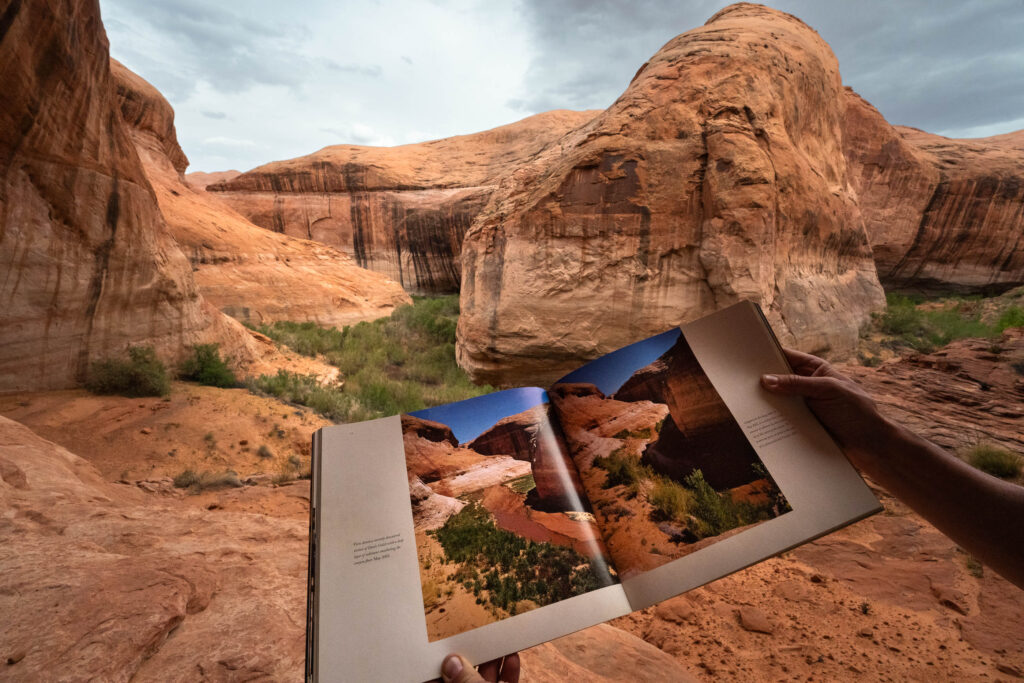
“In Glen Canyon, that recovery is happening all on its own without human intervention,” said Eric Balken, director of Glen Canyon Institute. “I think that’s one of the most impressive things about this place, is that all of the recipes for ecological recovery are here. We just have to get out of the way.”
Dramatic changes
In late April, the Glen Canyon Institute and Returning Rapids Project, organizations that are documenting what’s emerging as the reservoir recedes, took 11 Colorado River advocates and a few journalists to witness Glen Canyon’s recovery.
“We’re in unprecedented times,” Mike DeHoff, a co-founder of the Returning Rapids Project and former river guide, told the group the night before they departed from Bullfrog Marina — a popular gateway to Lake Powell that was forced to relocate boats and docks to deeper water near Halls Crossing this spring.
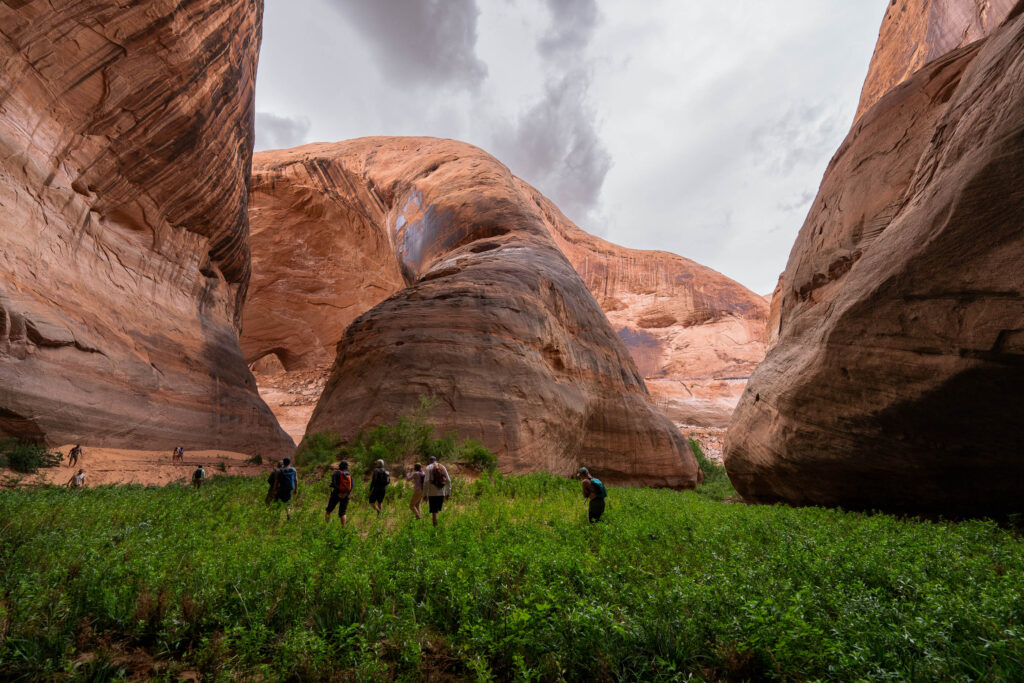
While the chirp of songbirds and sweet aroma of wildflowers awaited ahead, quicksand and sharp shells of invasive quagga mussels also loomed.
“Pay attention to your senses,” DeHoff said while describing the changing landscape ahead. “And don’t trust anything.”
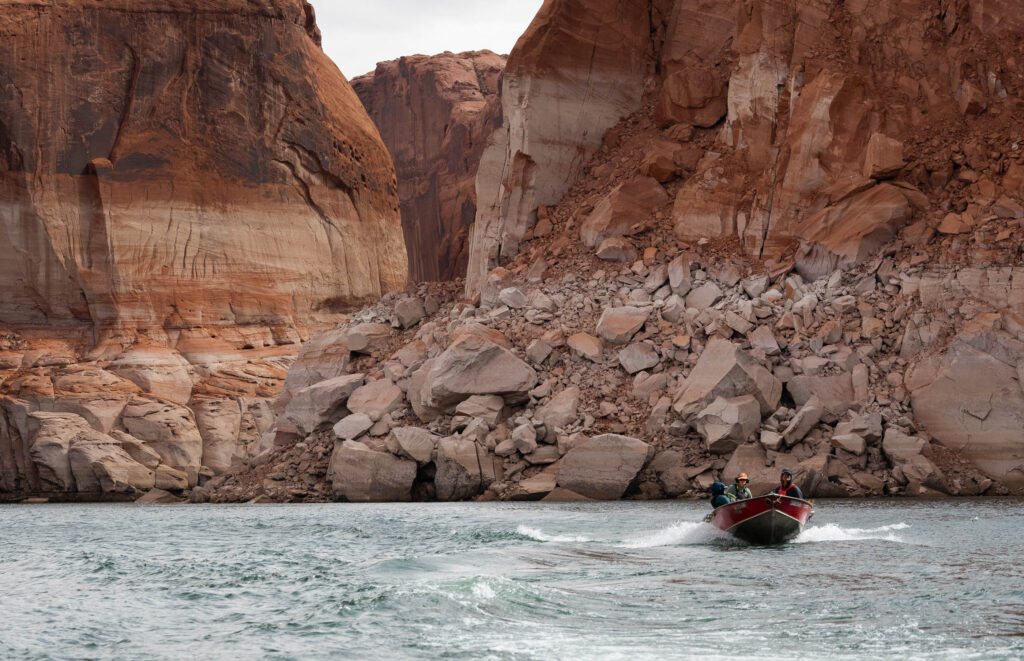
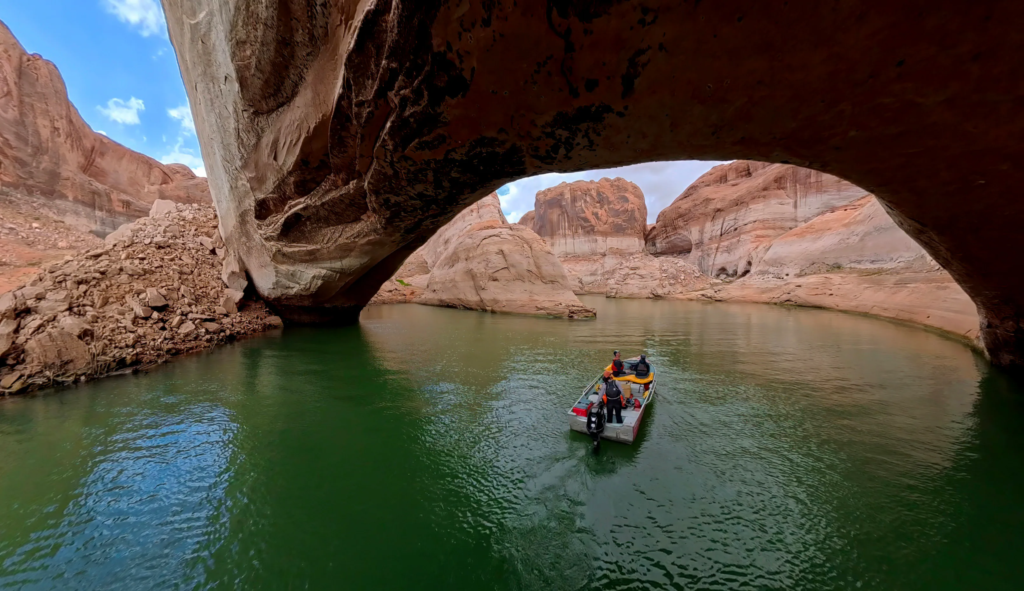
The next morning, it took the group nearly three hours to motor across the reservoir in pontoons and aluminum skiffs to reach the Escalante River Arm, where smaller side canyons such as Davis Gulch have emerged. Even at near-record lows, the group was amazed by how vast the reservoir felt.
The journey across the blue expanse was familiar to Balken. He has taken over 50 trips to the newly formed streams and surfaced rock features around Powell since he started working for Glen Canyon Institute 20 years ago. He was 19 years old then, and the reservoir was 74 feet higher than it is today.
“I’ve seen really dramatic changes in the canyon,” he said.
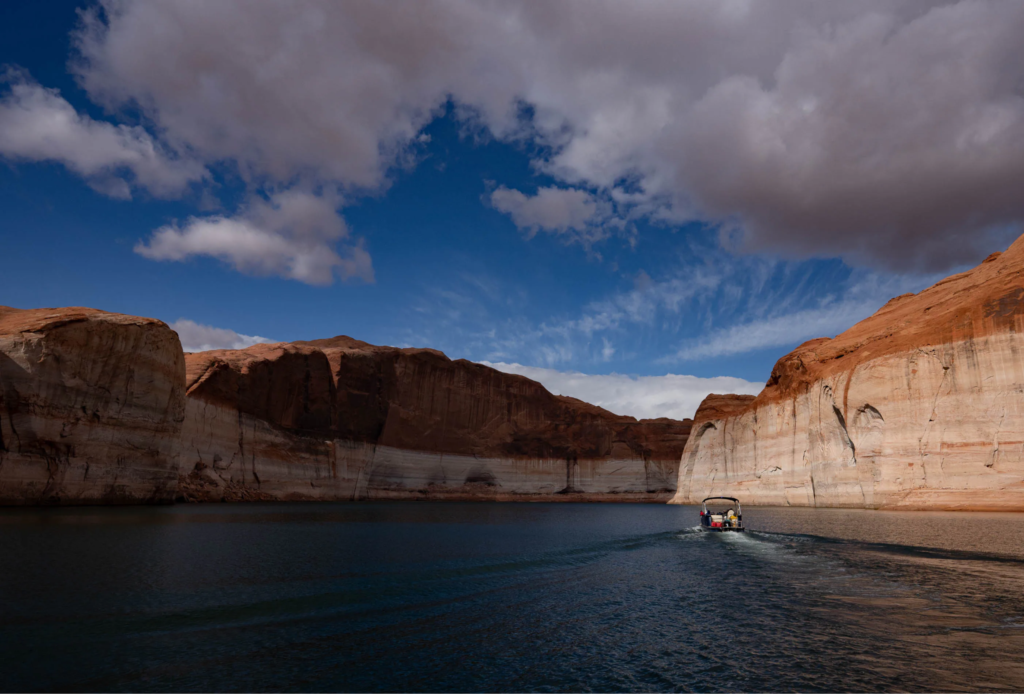
The reservoir’s steep drop had become obvious. A stark line ran across the middle of towering sandstone walls where waves once lapped: the top half dark orange like a terracotta pot, the bottom half resembling a creamsicle.
In shallower spots, grey trunks and branches poked out like skeletons crawling out of the water. “Ghost trees,” Balken explained.
“You can only imagine what it would have been like with all these trees green and thriving,” he then said.
In some side canyons, though, imagination is no longer needed.
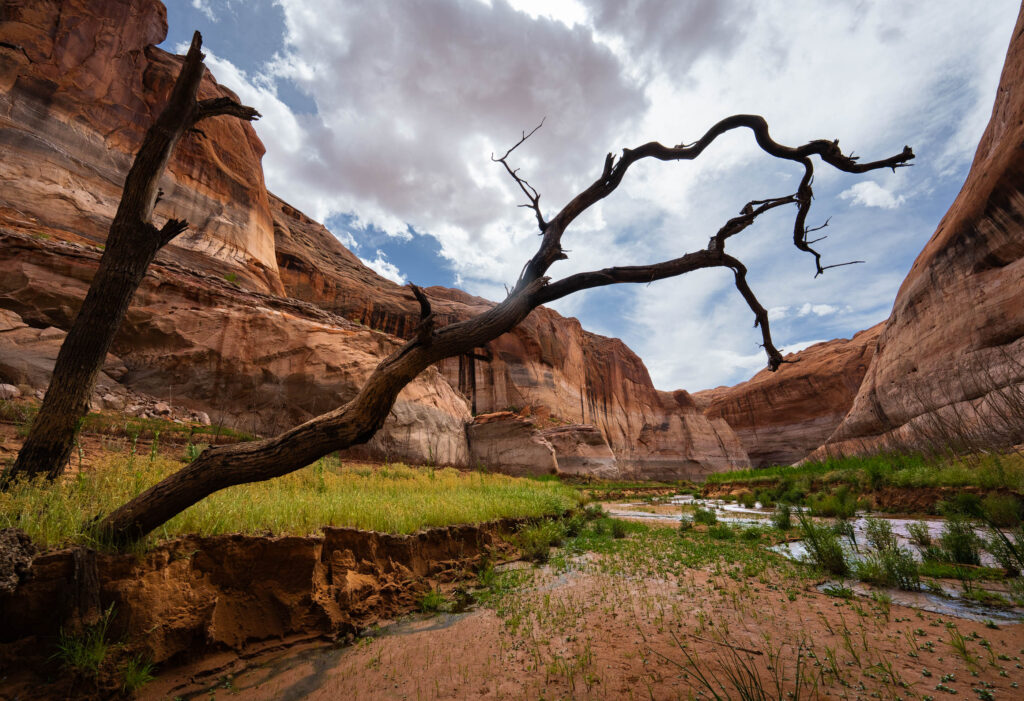
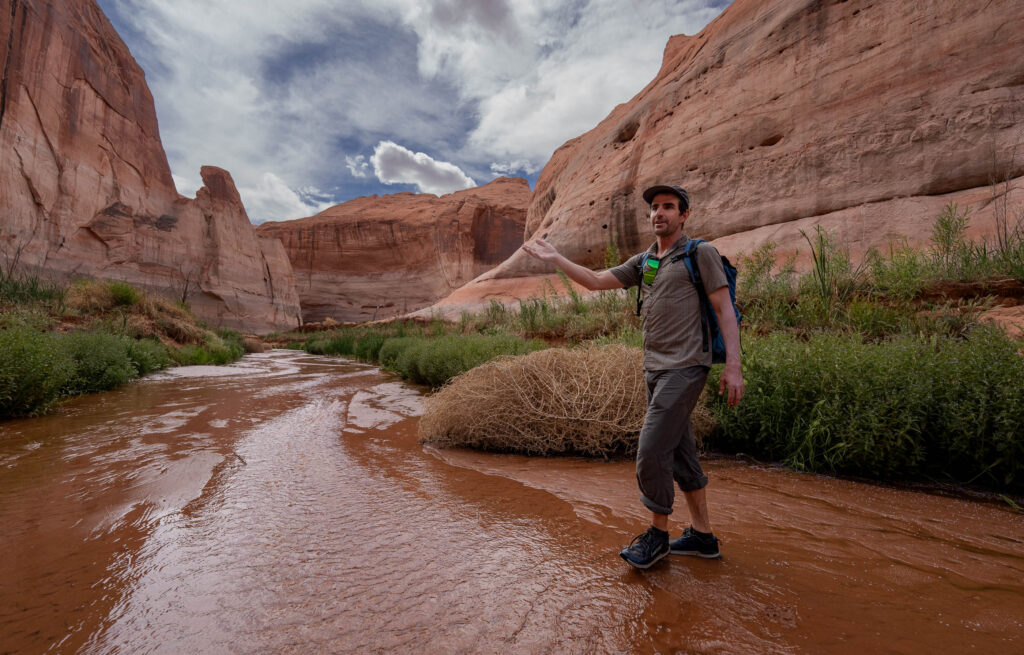
Fifteen years ago, the three miles of Davis Gulch that Balken led the group through in April were underwater. Some of the willows and cottonwoods that now line the gentle ribbon of water in the canyon have only been above Lake Powell for six years.
“In that short amount of time, they have recovered to such a great extent that we’re seeing diverse, functional ecosystems,” he said.
Tree canopies have formed. Purple-flowered American speedwell, long, green cattail grass and a variety of willows have filled the stream banks.
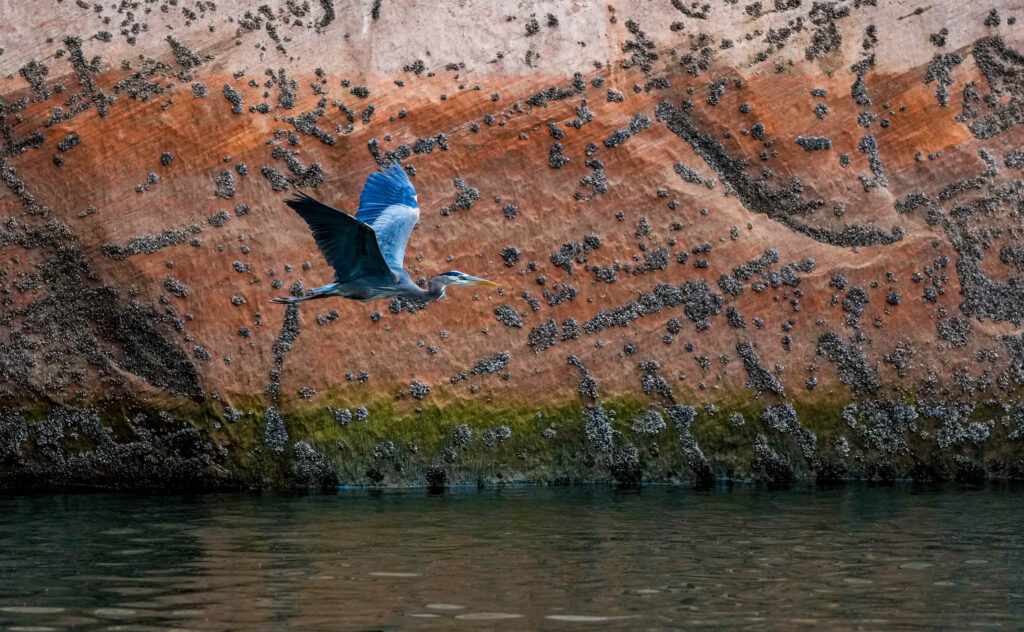
Those plants have created homes for insects, birds, frogs and larger wildlife. Balken counted 14 beaver dams in the three miles the group trekked. Others on the trip pointed out animal scat potentially left by otters, coyotes and cougars.
“It’s this huge natural laboratory for studying how ecosystems develop,” said Seth Arens, Utah Information Specialist with the Western Water Assessment, during an interview in May. “In some ways it’s this experiment on removing a dam without actually removing a dam.”
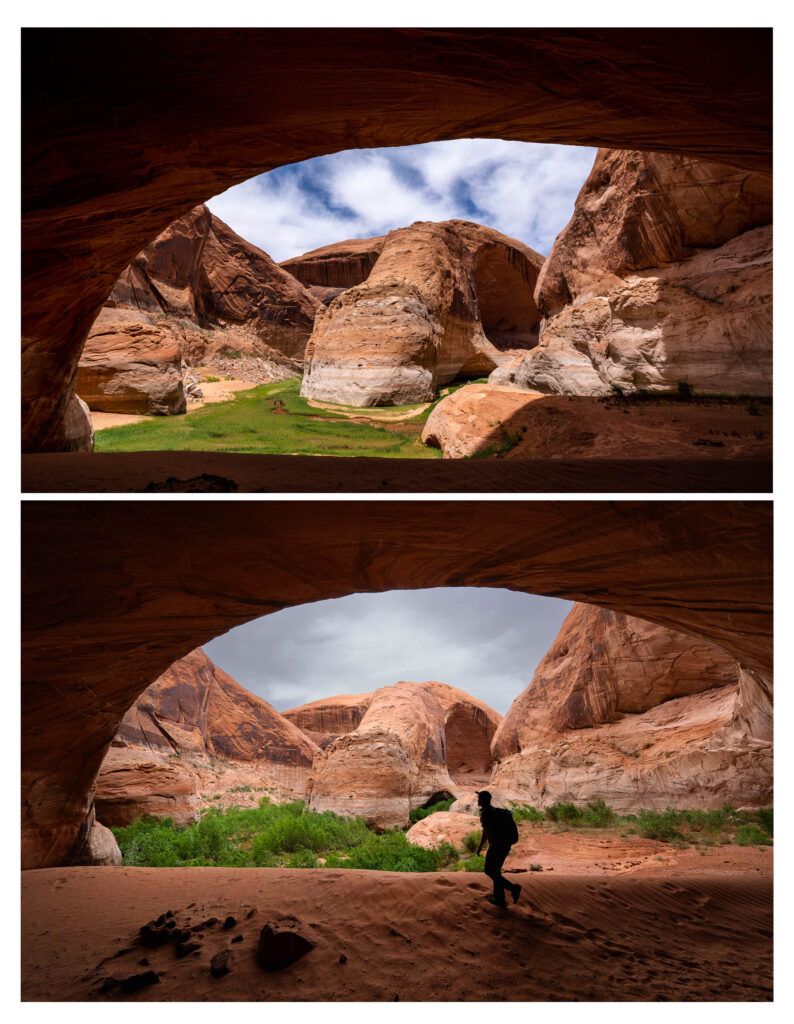
‘A living, breathing thing’
Arens wasn’t on the trip in April, but his research was. While on the pontoon, Balken passed out a one-pager summarizing Arens’ and his co-authors’ upcoming paper on ecosystems emerging from Lake Powell.
In 2022, Arens set up plant surveys in 20 side canyons and began exploring two questions: What plants and ecosystems are establishing on landscapes previously flooded by Lake Powell? And how are those ecosystems changing over time?
About 100,000 acres of once-submerged land has surfaced since the reservoir was at its highest point in the 1980s, Arens said, including more than 180 miles of rivers and streams.
“[The] most surprising thing for me was just how quickly native ecosystems started regrowing along tributary creeks with flowing water some of the year,” he said. “There’s definitely a big difference between what happens on very dry landscapes and what happens on landscapes that are along or near a creek with flowing water.”
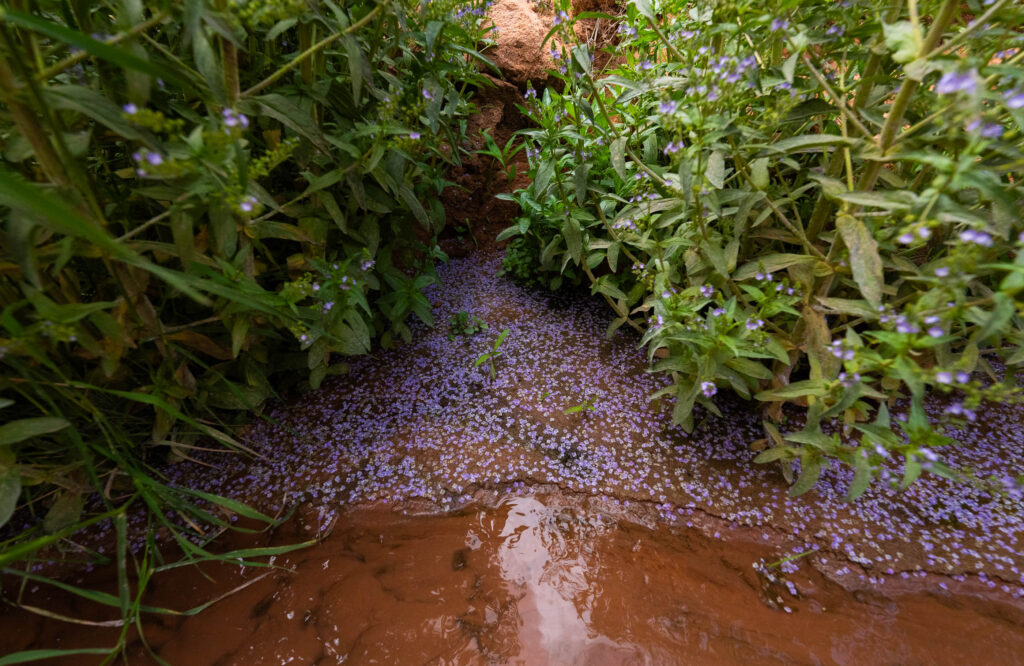
In the first year or two after a landscape emerges from Lake Powell, it’s barren and devoid of life. “The original surface features of that canyon — the rocks, the boulders — all of those have been buried smooth with sediment,” Arens said.
In the smaller side canyons, anywhere from 10 to 70 feet of sand, clay and shale has been left in Lake Powell’s tracks, Arens said. In Cataract Canyon, where the main stem of the Colorado River runs, there’s closer to 200 feet of sediment.
Non-native plants like Russian thistle — or tumbleweed — first grow in the exposed landscape. But eventually, monsoonal rains dump into the canyons and form flash floods. The rushing water carves stream channels, and if water flows in the canyon year to year, native grasses and shrubs begin to thrive.
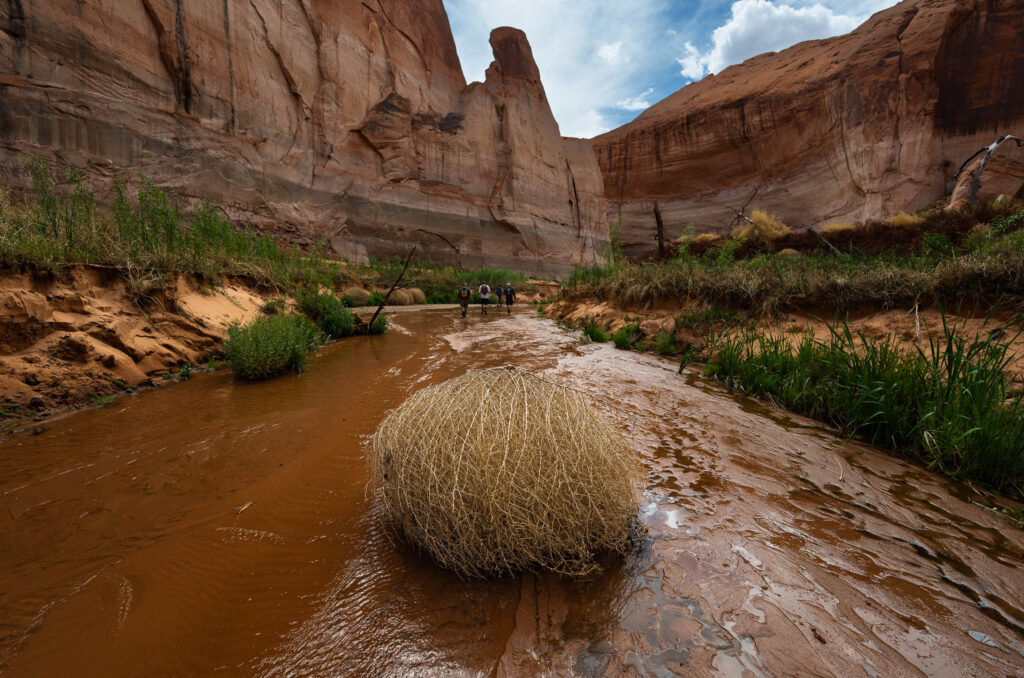
“By four to seven years, you’re starting to see a system that really resembles a system that was never flooded,” Arens said.
In areas that surfaced 25 years ago, Arens has documented cottonwoods that are 40 to 50 feet tall and over a foot in diameter. At that point, there’s typically not a difference between once drowned landscapes and areas above Powell’s high water line.
“It’s not a slick rock container for water anymore,” Arens said. “It’s a living, breathing thing. They’re vibrant, rich, native ecosystems that are growing in many locations. I think that needs to be considered, because it’s not the same situation as it was before.”
An opportunity to rethink management
Arens’ research is the first comprehensive survey of the returning vegetation in Glen Canyon.
“The park service has so much on their plate already in managing the changes in Glen Canyon that they have not yet had the resources to do these kinds of large scale ecological observations in the canyon,” Balken said.
The National Park Service manages emerging landscapes the same way it manages the rest of Glen Canyon National Recreation Area, a park spokesperson said over email. “Ecologically, natural systems adjust as the shoreline changes, and we continue to monitor conditions to support those natural processes,” they wrote.
Because of the park service’s limited capacity, Balken said nonprofits, researchers and visitors to the area can fill the gaps in data collection. Glen Canyon Institute set up a “Glen Canyon Restoring Ecosystems Project” page on iNaturalist where people can upload their observations.
“This is all just brand new science, and I think we’re just barely starting to scratch the surface,” Balken said. “It’s exciting. This is a place that people wrote off a long time ago, and it was assumed that these canyons could never come back to life, and here they are.”
“It’s such a hopeful sign that nature can be resilient in the face of climate change and over consumption of water,” he added.
Balken and Arens said they hope land and water managers will consider Glen Canyon in future decisions.
Reclamation cites Arens’ research in its draft environmental impact statement that lays out future management alternatives for Lake Powell and Lake Mead. However, the returning ecosystem is mentioned in just a few paragraphs of the over 2,000-page document released in January.
“We have a second opportunity to potentially rethink how we manage this landscape,” Arens said.
“By no means is it the most important, or probably even cracking the top 100 of most important issues when it comes to water management,” he added. “However, it would be a mistake — it would be a tragedy — to see this issue just not considered at all in those decisions.”
A new generation
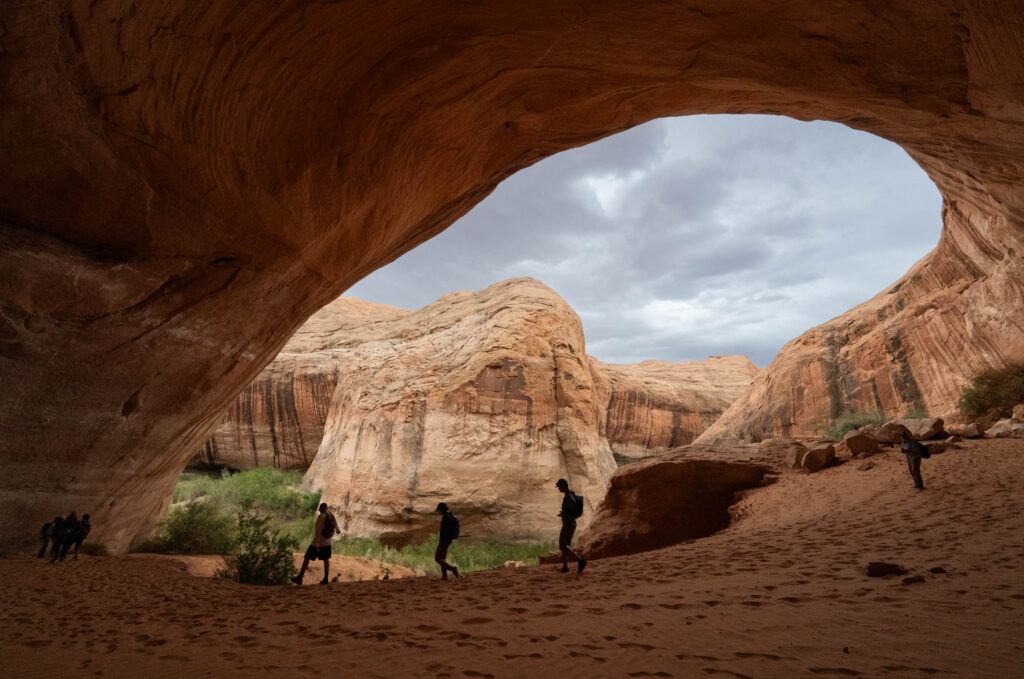
The group’s three-mile journey up Davis Gulch ended at a small waterfall that gently flowed over two rounded sandstone benches. Tall cottonwoods grew around the pool that formed above the cascade, which was underwater 15 years ago.
“Now it’s this little, magical fern gully,” Balken said.
The group wove a path down the canyon, whacking through dense thickets of willows and trudging through knee-deep water pooled behind beaver dams.
“One of the worst things that could happen to Glen Canyon already happened,” Stutz said as she quickly stepped across sinking sediment.
The generation of Katie Lee, a singer and avid defender of Glen Canyon until her passing, were moved by what they lost, Stutz continued. But now, Stutz’s generation of twenty-somethings is motivated by what’s returning.
“We’re rewriting the narrative,” she said.
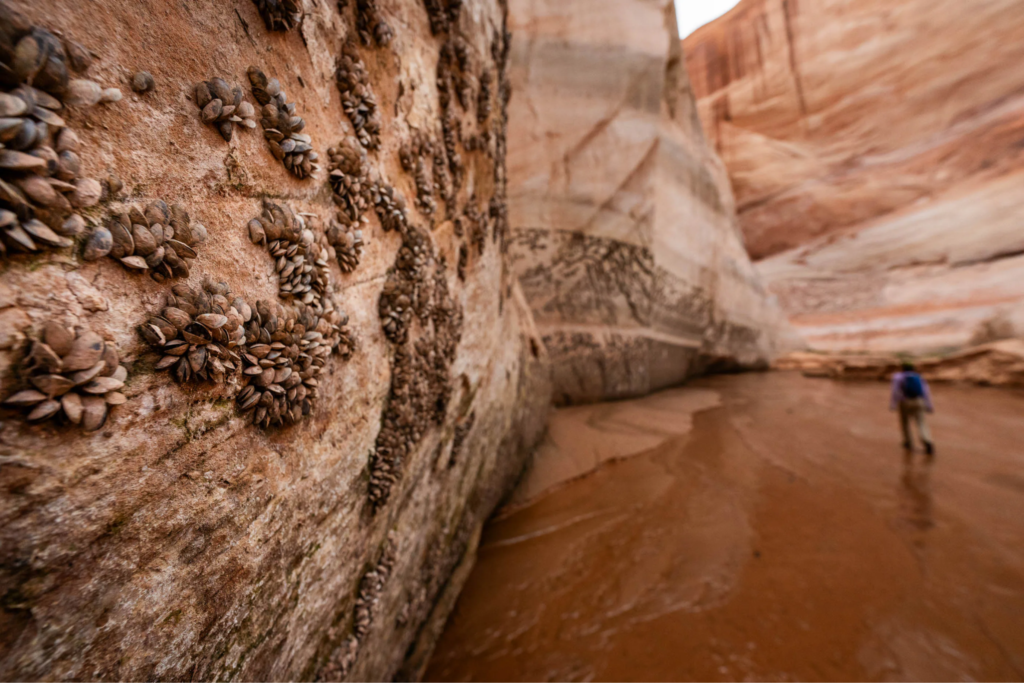
As the group neared the border between land and lake, the buzz of insects quieted and the willows shrunk. A gust of wind shook the invasive quagga mussels lining the sandstone walls like a maraca.
“A quagga windchime,” Balken said.
Bird tracks covered the mud at the edge of the reservoir. The group loaded onto the pontoons, hugged by ghost trees. Now it was a bit easier for them to imagine what those gray branches once looked like, lush and green above water.
Note to readers • The Salt Lake Tribune traveled with Glen Canyon Institute as part of the reporting for this story. The Tribune paid for its share of costs related to travel and food on the trip, which was recorded as a donation to the organization.
This story was reported in partnership with the Colorado River Collaborative, with support from The Water Desk at the University of Colorado, Boulder.