


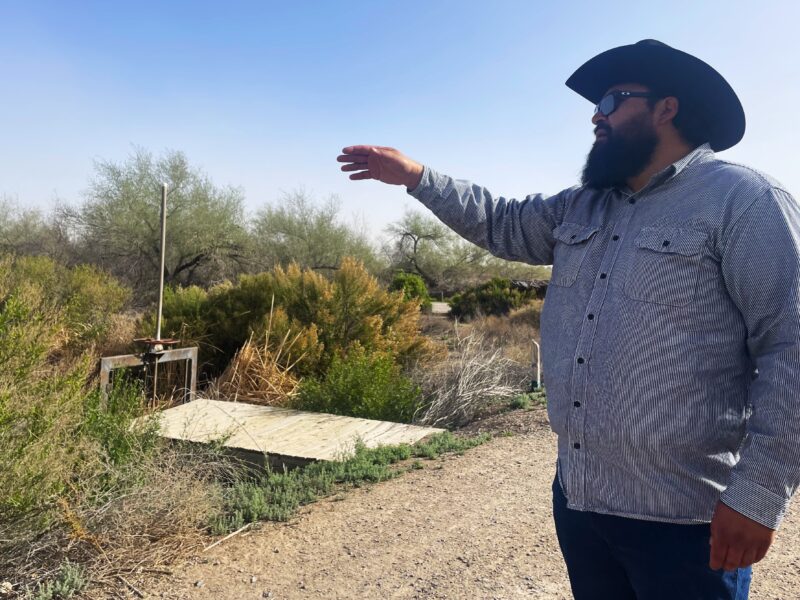
EL PASO, Texas — The wild waters of the Rio Grande have not flowed freely through the Rio Bosque wetland since 1943.
After being left to run dry for most of the 20th Century, locals in recent years have secured enough water to flood new life into this El Paso ecosystem — though its challenges are far from over. These days, the 372-acre Rio Bosque Wetlands Park gives visitors a glimpse at what the riparian environment looked like long before urbanization and a hardened U.S.-Mexico border fundamentally altered the landscape.
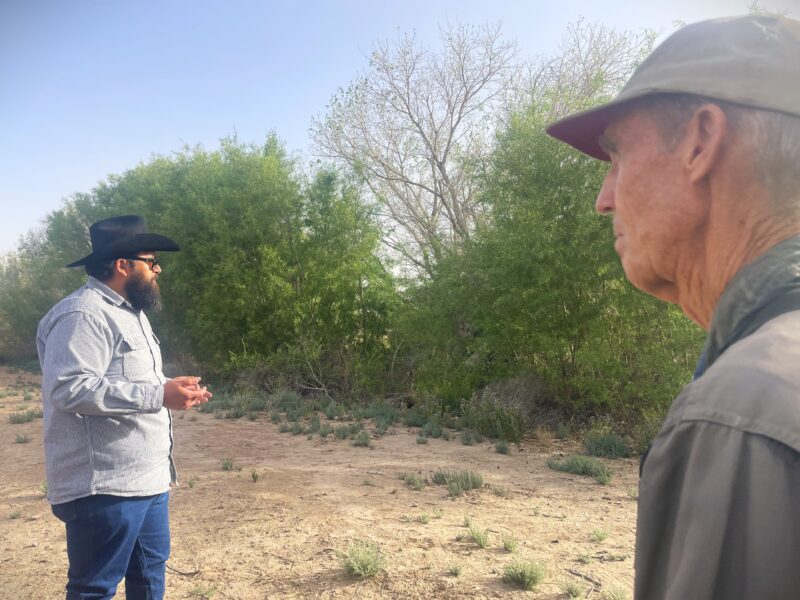
“We’re trying to reestablish the historic environment of the valley for people to experience,” said John Sproul, sporting a worn baseball cap as he hiked through the wetland one windy spring morning.
Although Sproul retired as park manager two years ago, he continues to work here as a volunteer, guiding tours, sharing the park’s history and cultivating its future. That painstaking work entails hand-pulling invasive species and watering new native saplings one by one.
Binoculars slung across his chest, Sproul pointed at a Cooper’s hawk nesting above — one of 270 bird species now observed in the bosque. Though bird diversity has doubled since restoration began in the mid-1990s, he’s still awaiting the return of yellow-billed cuckoos.
Signs of human impact over the years were hard to miss. Empty chip bags caught in the snares of Russian thistle, an invasive species that dries out into rolling tumbleweeds. Clumps of invasive, water-thirsty salt cedar spread their seeds as far as the wind can carry them.
For better or worse, this park is a parable of human intervention. The reconstruction of this wetland is not a story about how environmental management successfully brought an ecosystem back from extinction to thrive on its own. Rather, the wetland now requires constant tending, as humans painstakingly control the flow of water throughout the Chihuahuan Desert region and redirect some of it here.
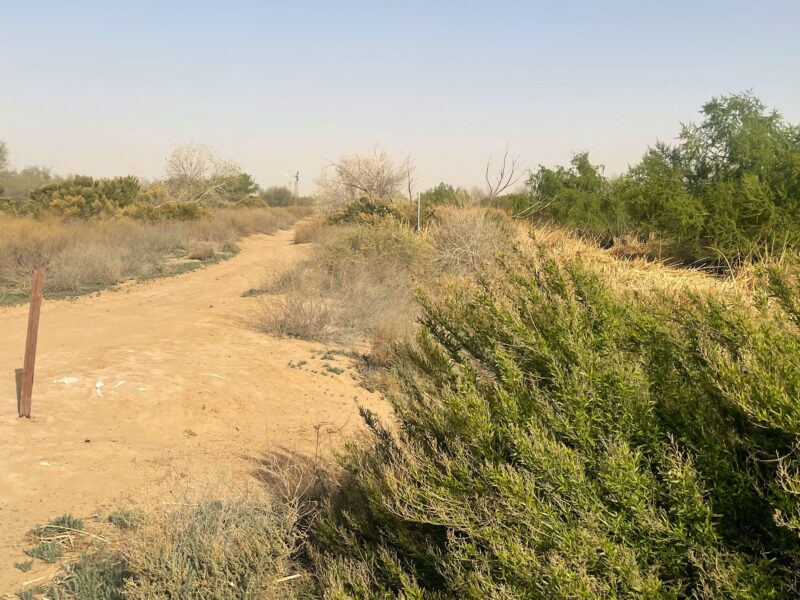
Water is the single most important factor in determining what lives here.
On average, this area of the Chihuahuan Desert receives just 9 inches of rain each year, with most of that falling during the late summer monsoon. In 2023, the park received just half its usual gift from the sky. Last year, El Paso marked its third-warmest year on record, leaving even average precipitation vulnerable to evaporation.
To make up for the loss of the riverflow, two electric pumps and two windmills run 24 hours a day, feeding Rio Bosque with everything they can pull out of the ground. Though that 500,000 to 700,000 gallons could fill an Olympic-sized swimming pool every day, it’s still just a drop in the bucket for what a thirsty wetland needs.
The wetland’s greatest source of water comes from the nearby Roberto Bustamante Wastewater Treatment Plant, which delivers whatever is left over after fulfilling obligations to the surrounding irrigation district. From May to September, when the nearby pecan farms drink irrigated water from the Rio Grande, the treatment plant gives the park an average of 4.5 million gallons per day.
That’s in a typical year, at least. The Rio Grande starts in Colorado, and the Centennial State suffered a dry winter amid a regional drought. Hydrologists are forecasting that 2026 will be one of the driest years for the Rio Grande basin in decades, with most reservoirs’ water levels at just 15% of capacity and the Elephant Butte Dam in New Mexico holding back the Rio Grande’s annual release until later this month.
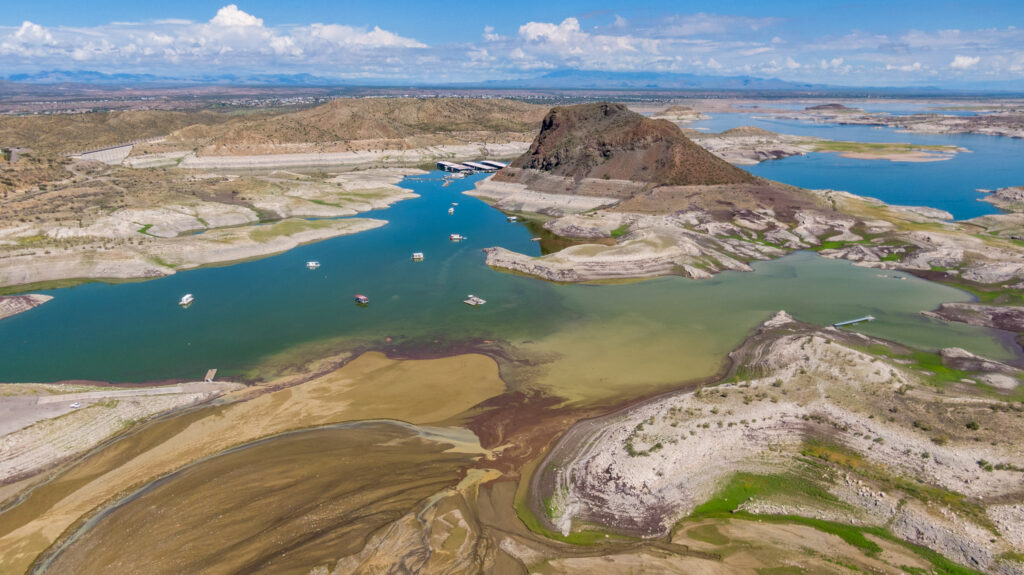
Humans have divided up every drop along the Rio Grande, sustaining not just neighborhood faucets and flushes but a multibillion-dollar agricultural industry. And yet climate change and regional drought leave each year’s water supply uncertain.
Although the treatment plant tends to produce the same amount of water every year, less water in the Rio Grande means the irrigation district will need more graywater this year. That leaves less for Rio Bosque. The water needs of thirsty pecan and alfalfa farms often come first, even under Texas’ rule of capture, where the entity with the strongest pumps gets the most groundwater.
The Rio Bosque wetland has persevered through countless dry spells, as desert ecosystems are evolved to do. But water still marks the difference between a recovering wetland and a stable one.
In the mid-2010s, the treatment plant added a second batch of water deliveries in the winter. The city built the groundwater pumping stations to supplement throughout the year. This creation of year-round moisture helped maintain a water depth that supported the return of native plants. As researchers put it last year in the journal Wetlands, the plant community moved from “invasive tumbleweed to one dominated by tolerant, competitive wetland plants.”
On the tour, Sproul pointed out living proof of the project’s success: young willows, mature willows, evidence of a resident beaver with a growing fan club.
Beavers are a good sign, not just because they require a certain amount of water to move in but also because they give back. By holding water in place, their dams further nourish surrounding plants and strengthen the ecosystem as a whole.
Andrea Everett, a member of the Ysleta del Sur Pueblo, recalled a story from her uncle about how a single beaver’s dam created a vibrant “green up” 60 miles upstream at Mesilla Valley Bosque State Park in New Mexico.
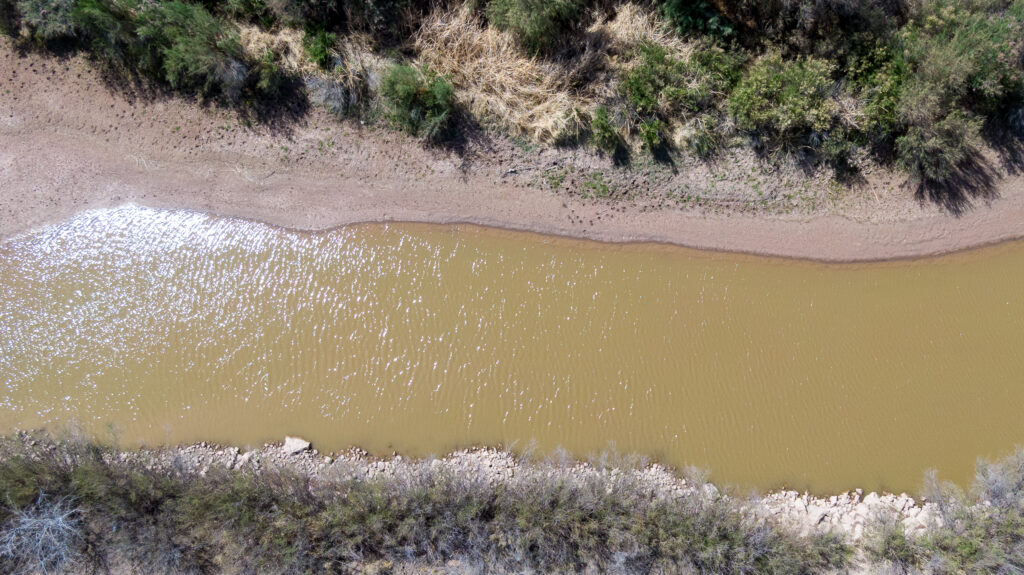
“There was about an inch to three inches of water that kind of sat in there, and right now there’s about a foot of water because of the beaver,” she said. “This is what one species can do.”
For Everett, Rio Bosque is more than a city park. It’s still part of the Rio Grande, which flowed through just 80 years ago — a blink of an eye, in the grand scheme of things. U.S. border policy limits when and how she can visit the sacred river, but she can always rely on Rio Bosque to rekindle a sense of peace.
“The Rio Bosque is a mitigated wetland, but it still holds some of the original channels,” she explained.
From time immemorial, plants living alongside the Rio Grande adapted to cyclical water patterns, soaking up spring swells, then falling dormant during hot and dry periods.
Animals followed much the same pattern, migrating when there was water and leaving when there was not.
But the fluctuating and temperamental Rio Grande made for a messy national border, as well as a dangerous liability for the rapidly growing cities filling the banks on either side: Ciudad Juarez in Mexico and El Paso in the United States. Thus, in the 1930s, American and Mexican officials agreed on a literal concrete solution: the Rio Grande Rectification Project.
Encasing the channel in concrete, engineers locked the river’s flow into place, redirecting the Rio Grande more than 100 yards away from the historic channel that would become Rio Bosque.
Before the project, Rio Bosque actually sat on Mexico’s side of the border. With the border solidified and a new map drawn up, the dehydrated wetland ended up on U.S. soil. The land was eventually granted to the City of El Paso in 1973 through the Federal Lands to Parks Program.
Without water, thirsty cottonwood and willows dried up. Wetland herons and ducks flew past. Invasive Russian thistle and salt cedar settled into niches left in the newfound dryland.
It looked like the old wetland had been lost — but desert organisms are adept at surviving even decadeslong dry spells. While the willows and native grass vanished from the surface, their seeds remained embedded in the soil, awaiting the right conditions to reawaken.
Even as it comes back to life, the wetland’s challenges continue to grow.
Among them: an increasingly hardened border and urban projects in El Paso.
Although birds can fly over it, the border wall to the east otherwise closes off natural migration into the Rio Bosque. (This section of wall was exempted from the rigors of an environmental review by the Real ID Act of 2005.) On the American side, roads, concrete irrigation canals and lush farms further fence in the wetland. Many locals also fear a proposed highway expansion will be more than the scrappy ecosystem can take.
Although a highway already runs through El Paso, the Texas Department of Transportation released new plans in 2024 to extend Texas State Highway 20 more miles through the city, along a route directed right toward Rio Bosque.
A spokesperson for TxDOT told Courthouse News the department is still evaluating different proposals. The department expects to finalize its plan in December, but many advocates of Rio Bosque are preparing for the worst.
“Everywhere you look, there’s something being built and more layers of concrete going on the desert floor,” said Rick Lobello, founder of the El Paso Wildlife Conservation Society.
All that concrete has implications for native species — including burrowing owls, which Lobello has worked to conserve and actually visits Rio Bosque to observe.
“If you don’t have ground where they can go into a burrow, because it’s been paved over for a parking lot, they struggle,” he said.
An educator by trade, Lobello believes protecting habitat starts with teaching people about it.
“My philosophy is: If you want to protect the environment, then the first thing you got to do is help people know what’s out there,” he said. “If people don’t know what that bush is, if people don’t know what that bird is, they’re never going to love it. And if they don’t love it, they’re never going to fight for it.”
Another big fan of this wetland is Mary González, a Democrat who has represented El Paso in the Texas statehouse since 2012.
“In the middle of a desert, to have a wetland like the Rio Bosque is a true treasure,” González said in an interview. Like others, González worries the Highway 20 expansion might bury it. She hired a consultant to develop an independent environmental review and push back. Still, she says the highway proposal is just the latest development to threaten this fragile ecosystem.
“The location is what makes it unique — but it also makes it challenging,” she said. “It’s right there on the border. It is in a highly trafficked area with continued development.”
Although the land here is healing on its own, park staff and volunteers continue to hand-pull invasive species one by one. Young native trees are often hand-watered and protected with mesh to ensure their roots grow deep.
“One year, we had to bring in a water truck to water the trees,” recalled park manager Sergio Samaniego.
Years ago, as a graduate student, Samaniego conducted fieldwork in Rio Bosque. Today, he’s one of two full-time employees who maintain the park alongside Sproul and other volunteers. This site remains a priceless outdoor classroom and laboratory, where scientists study the diet of burrowing owls, how the border wall affects habitat, and the impacts of wetland restoration on local water quality.
This wetland was once shaped entirely by natural forces. Now, it depends on human intervention. People like Samaniego and Sproul watch for where native seeds are germinating, then move in to support them. They make sure the wetland gets enough water and advocate against threats like highways.
All of it is a delicate, fragile balance, said Samaniego. “We work hard, like the trees.”
This story was produced by Courthouse News Service, with support from The Water Desk at the University of Colorado Boulder’s Center for Environmental Journalism.