


Gerry Morrell wouldn’t necessarily call himself a birder. But even through the sound of cars and semis speeding past on the nearby interstate, he can pick out the call of a kingfisher. Among the frenzy of bird calls at St. Vrain State Park at any given moment, he’s able to isolate and identify just one.
Tall, lanky great blue herons are anything but a rarity at the park; but Gerry and his wife, Janet Morrell, had only just begun to see them again in the last few weeks when they visited in July. Persistent drought conditions have worsened the West’s ongoing water crisis, and it seems as though the birds can tell.
Gerry and Janet have noticed it, too. One warm, mid-July morning, water levels in one of the park’s ponds were higher than the couple would have expected. “This one was down, now it’s up,” Gerry said. “I wouldn’t think that because of everybody’s call for water.”
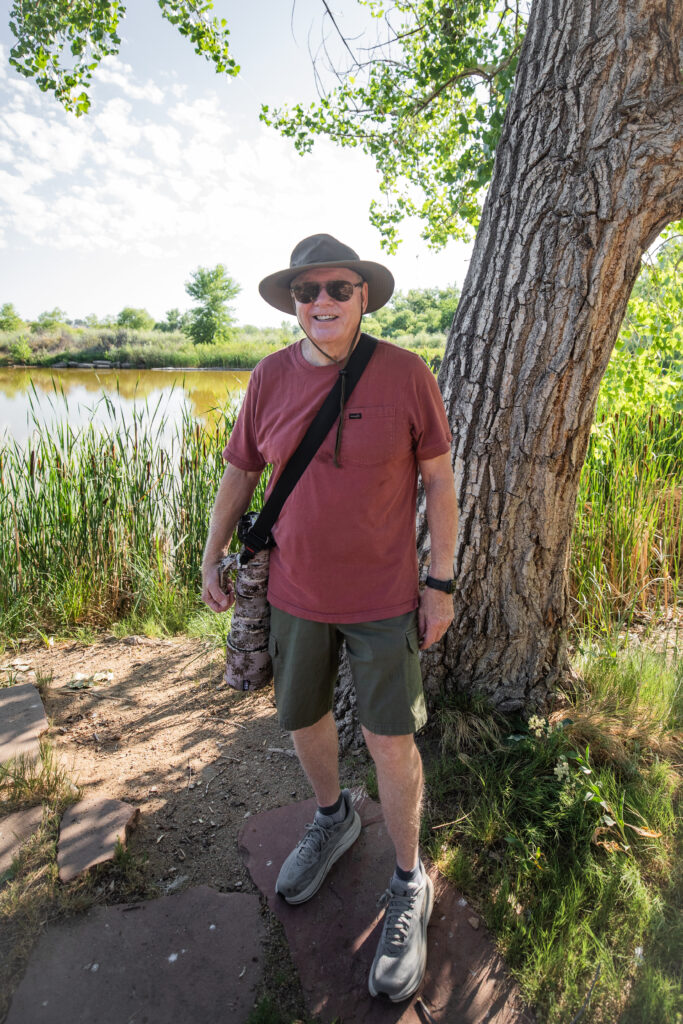
The ponds at St. Vrain State Park are filled by groundwater and overflow from the neighboring St. Vrain Creek. Gerry noted a temporary increase to the water level, but birds local to the area have not been so convinced. “I did photograph a peregrine falcon over here,” he said a mile into the morning stroll. “But this year, especially since this lake was kind of dead, I’ve not seen them.”
Globally, birds are an indicator of a healthy ecosystem. In the Western U.S., bird populations are grappling with prolonged drought conditions that threaten the health of reservoirs and streams and the habitat they provide.
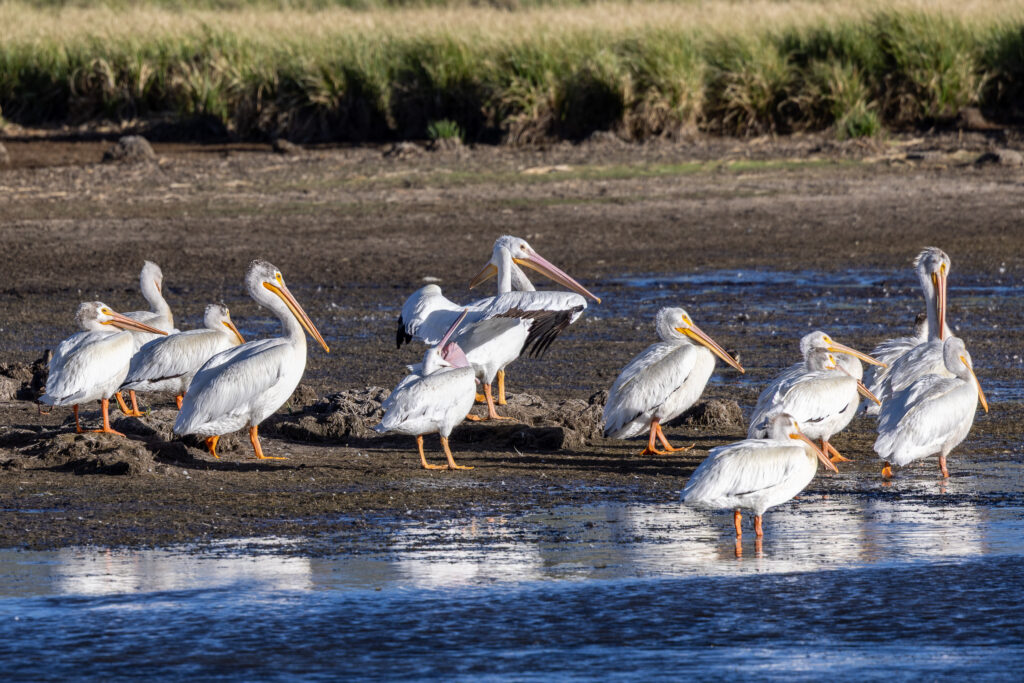
One symptom of a dry year may actually be beneficial to certain bird populations. Low level reservoirs expose nutrient-rich mudflats, which is like a buffet for shorebirds and waterfowl. But, too little water in reservoirs or streams leaves many birds with no respite from the drier than normal conditions.
Shorebirds and waterfowl are no strangers to St. Vrain State Park—Gerry and Janet can be sure of it. The park is like a sanctuary for all the birds that rely on the nutrients and habitat it provides. The couple has gone out walking and taking photos almost every single morning since Gerry retired 10 years ago. He and Janet work in perfect tandem; she is the spotter and he takes the picture.
“What’s that over there in the tree, Gerry?” Janet asked, eyes like a hawk. It didn’t look like much besides a white, shapeless blob on a tree branch. It could have been a collection of windblown cotton from the cottonwood trees scattered around the state park. Morrell wasn’t sure if it was anything at all, but he took the picture anyway.
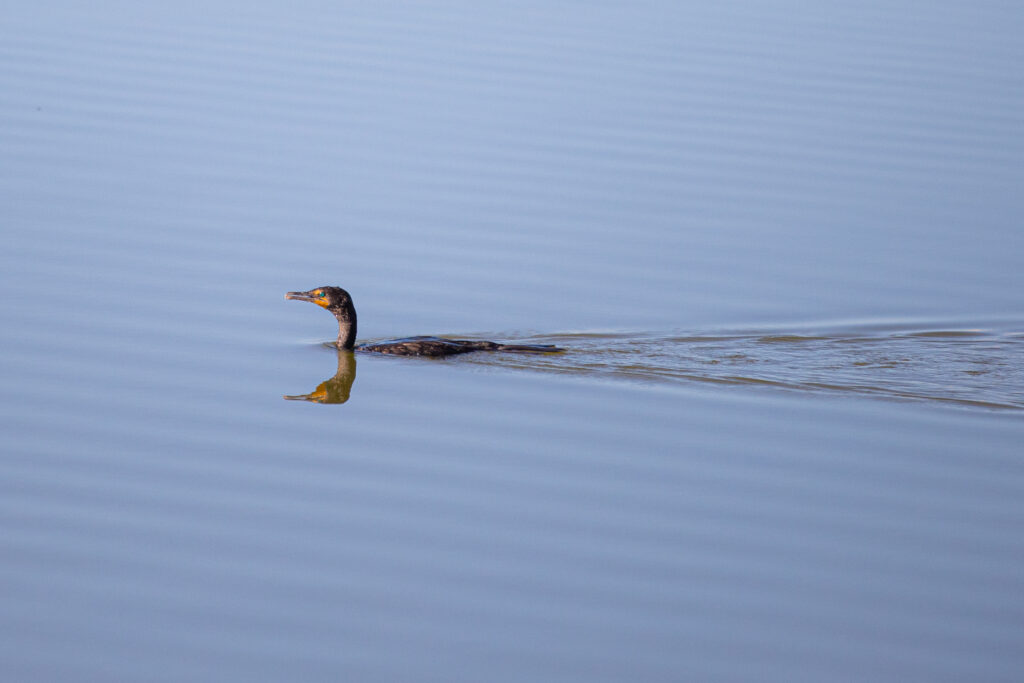
“I don’t count on anything,” Gerry said, remembering encounters with snowy owls, wood storks, killdeer, bald eagles, swans, various geese and grebes, double-crested cormorants, great blue herons, and snowy egrets.
But someone’s been missing this year. They’ve yet to see a night heron. Gerry and Janet both had their presumptions on why this could be. Perhaps it is due to a lack of fish. Maybe it could be the abnormally warm temperatures, or the unusual winter snow drought that has had a multitude of downstream effects.
But according to Colorado Parks and Wildlife, there is no hard data collected on the relationship between the reservoirs at St. Vrain State Park and the birds that feed there. Because of this, Gerry and Janet are left wondering where the night herons may have gone.
Low level reservoirs can bring in some birds that frequent mudflats but too little water poses a completely different risk. “When we have healthy reservoirs and healthy water, birds can spread out,” said master birder and volunteer at Denver Audubon, Patti Galli.
There are different pockets of this behavior, depending on the biodiversity of an area and its proximity to one of the major avian flyways. The eastern plains of Colorado, Wyoming, Montana and parts of New Mexico host different birds and behaviors than the high alpine reservoirs of the Rockies, which themselves are different from the salt lakes of the Great Basin.
Without healthy reservoirs and streams there is more stress on these birds, especially when they have to seek out other habitats that may already be overcrowded or unproductive. “If everyone is fighting at the waterhole and there is just not enough, someone is going to pay the price,” Galli said.
According to Galli, having less available water and habitat is a huge risk for birds. While healthy birds can spend time and energy on looking for a secondary habitat, “those who are weak or old just might not be able to do it,” Galli said.
That threat of less and less water remains. At its worst, a low level reservoir can turn into a barren wasteland of cracked and dried mud, unfit for birds. As reservoirs across the west grapple with a dwindling water supply and a foreboding future, the relationship between birds and reservoirs in the west remains up in the air.
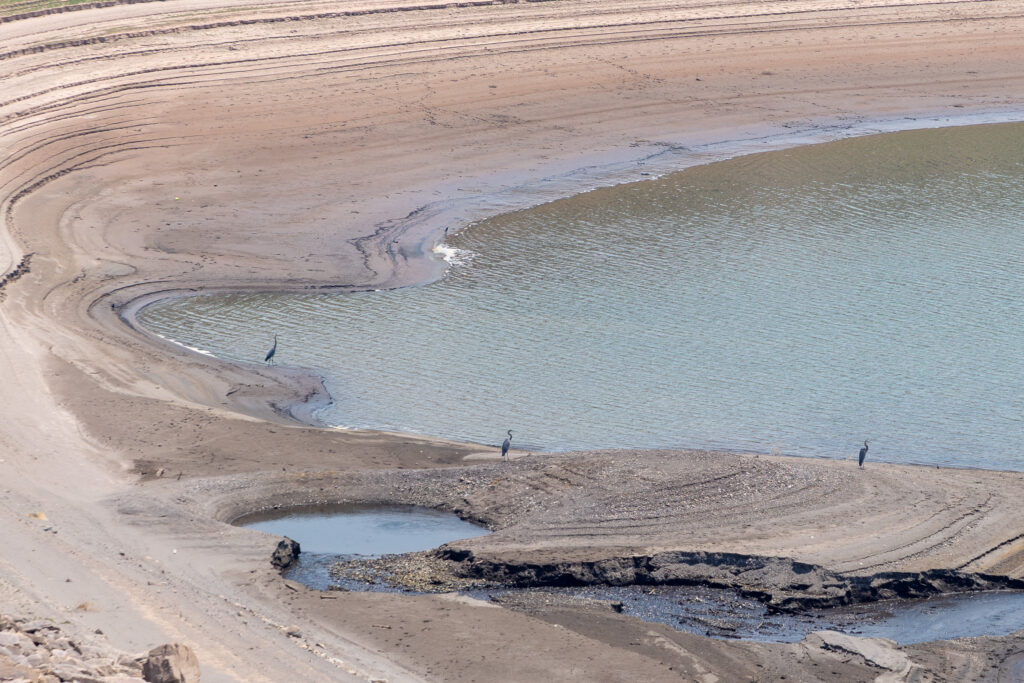
Antero Reservoir serves as a drinking water supply for Denver Water, located in Park County, Colo. In response to the worsening drought, Antero was closed to the public in May 2026. But it is not just fishermen and boaters that have vanished from the reservoir bed.
“There are just no birds,” said Jack Bushong, a birder who shares bird sightings and facts on YouTube, Instagram and TikTok. Prior to its draining, Bushong visited Antero Reservoir, explaining that it was one of the most biologically productive habitats for birds in the state of Colorado. “It would not be hard to see 40 to 50 species there in just a few hours,” Bushong said.
But now, Antero’s cracked surface no longer offers habitat or fuel for the various shorebirds or waterfowl that depended on it.
Bushong expects there to be no waterbirds remaining in the area; all that is left is a low density of species that inhabit the sagebrush steppe around South Park. “Maybe a horned lark flying around, you can see that anywhere,” Bushong said. The reservoir and its shoreline is what attracted the waterbirds, and what made Antero Reservoir so ornithologically important. “When it’s dry, they all leave.”
Bird populations and behavior fluctuate with environmental changes, dry years like this one can be cause for concern. It is possible that nearby exposed mudflats can provide a more productive habitat for shorebirds because exposed mudflats have varying degrees of desirability among birds. According to Bushong, shorebirds are drawn to long, flat stretches of mud, rather than steep slopes made of sand.
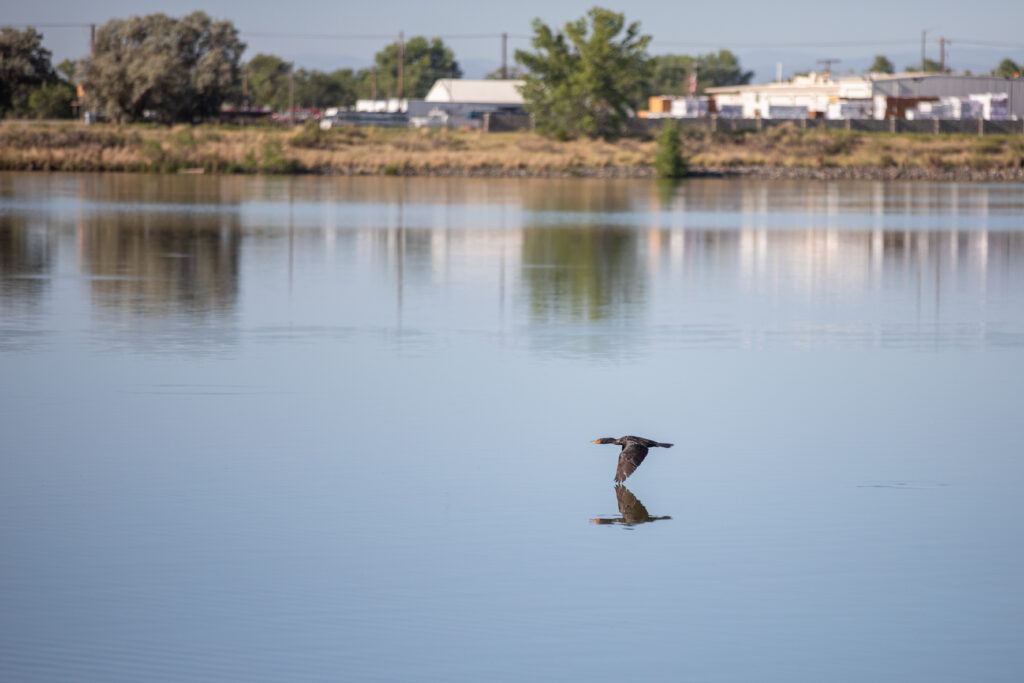
The draining of Antero was more than an inconvenience for birds in the area. For Bushong, it was heartbreaking, and continues to be devastating.
“Antero is pretty unique because it has a lot of breeding birds,” Bushong said. At one point, one of those birds was the snowy plover, said Bushong. The snowy plover is currently listed as a state species of special concern by Colorado Parks and Wildlife.
Without a suitable habitat for breeding at Antero, breeding birds have to find suitable habitat elsewhere, an arduous task. “There’s only so much habitat that’s going to support so many birds,” Bushong said. Breeding birds may be forced to attempt to breed in more marginal habitats, requiring them to fly longer distances for less productive environments. If they cannot find suitable habitat, they will not breed.
A similar tune is sung across the West. According to Emma Rosen, a birder and former employee at Mono Lake Committee in California, maintaining healthy habitat for these birds is of critical importance. Needing to seek out a new habitat could mean life or death.
Mono Lake is particularly important to phalaropes. These shorebirds often fly from California to South America in just three days, Rosen said. These birds count on having enough food at Mono Lake to fuel the rest of their journey.
Mono Lake currently sits below its target elevation of 6,392 feet above sea level. 6,392 feet is the minimum elevation required to support localized ecological health, including birds. “It still does support a lot of migratory birds at its current level,” Rosen said, despite its failure to reach its target elevation. “And if it weren’t for a lot of people fighting for it, it might have been drained like its neighbor, Owens Lake.”
For phalaropes and other shorebirds, an environment without sufficient food means searching for food elsewhere. Most shorebird species are attracted to habitats with exposed, but not dry, mudflats and shallow water with sparse vegetation. “Just because the habitat criteria is met does not guarantee that the habitat is productive,” Rosen said. “[It] could actually harm shorebirds by causing them to waste energy in places without adequate food.”
For bird enthusiasts and water enthusiasts alike, the connection seems clear. Healthy birds mean a healthy environment. Having a vested interest in maintaining healthy reservoirs is critical. But if that alone is not enough, many birders can agree on the next best reason to care about these bird populations. “They’re beautiful and awesome,” Rosen said. “Everyone should care about something that is so awesome.”
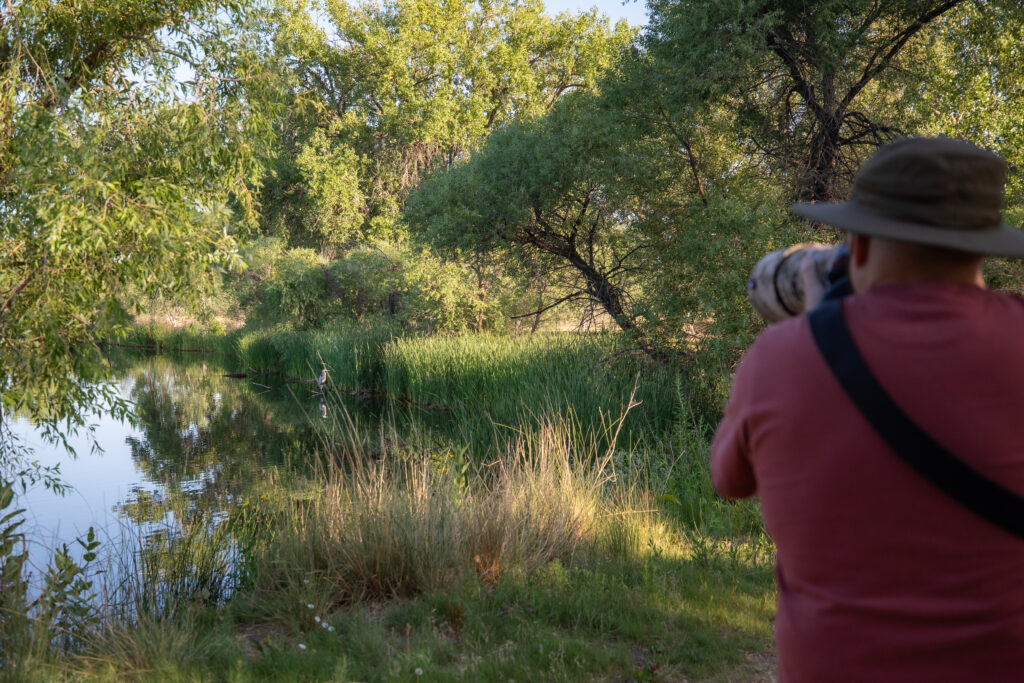
Back at St. Vrain State Park, the bird search continued. As the couple made their way deeper into the park, the sights and sounds of speeding cars dwindled, leaving nothing but the sound of bird calls and footsteps on gravel.
When Gerry returned home to go through his photos from the morning adventure, a frame from early in the walk caught his eye. He enlarged his photo of the shapeless blob nestled into the tree that Janet had pointed out, and there it was. A black-crowned night heron in all its glory. It would be their first sighting of the stocky bird of the year, atypical of years past.
This story was produced and distributed by The Water Desk at the University of Colorado Boulder’s Center for Environmental Journalism.